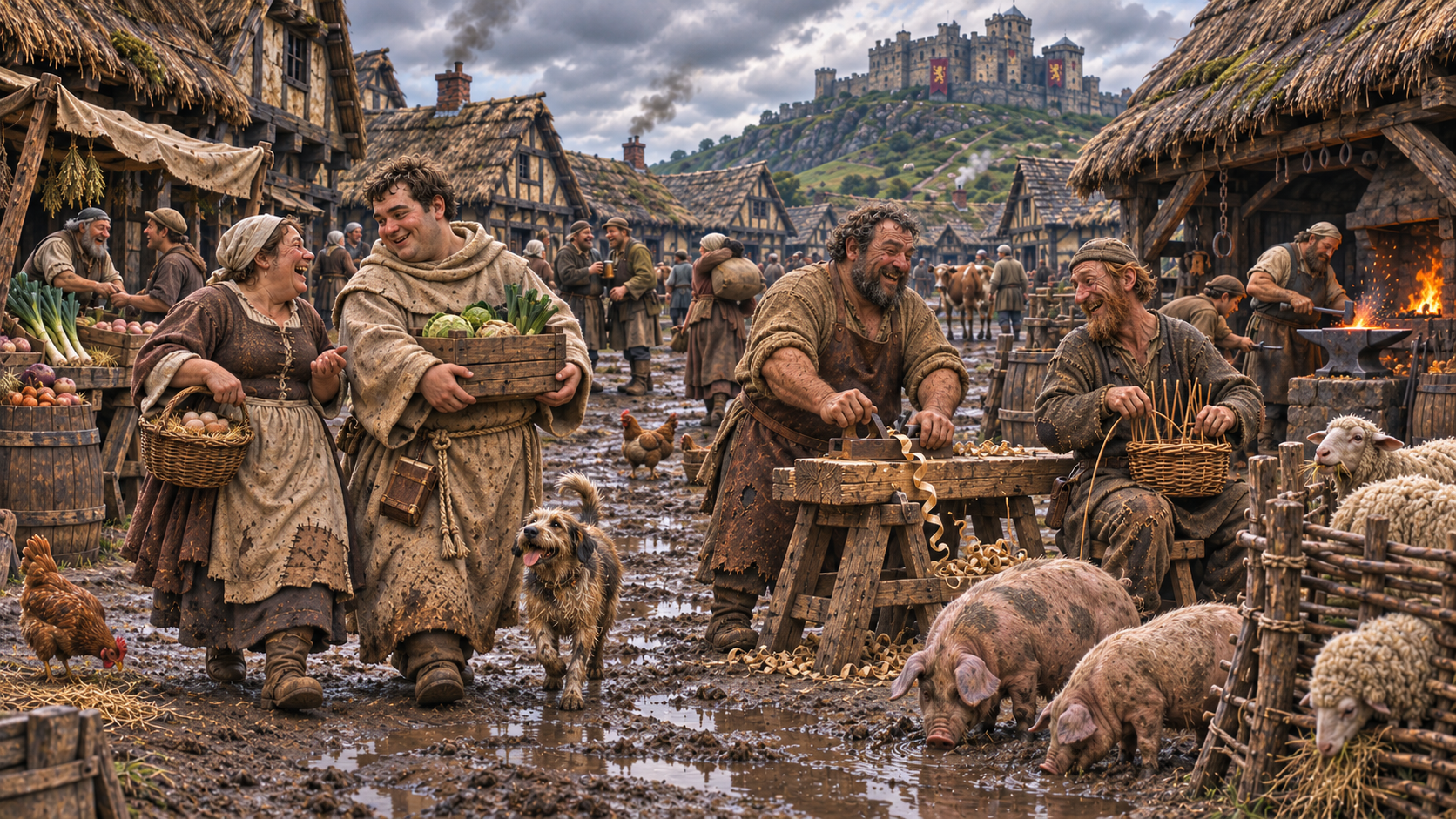
Run the place
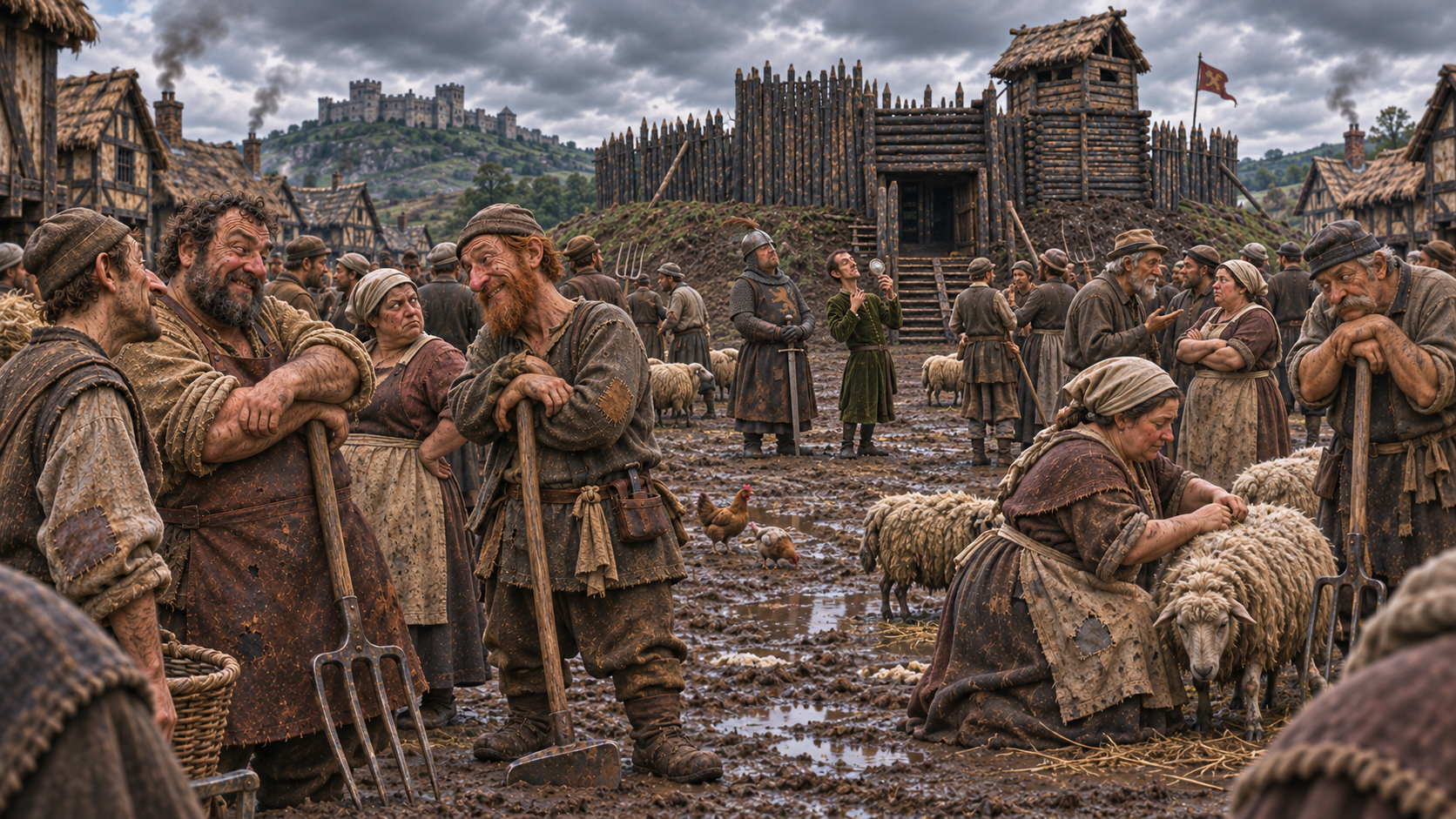
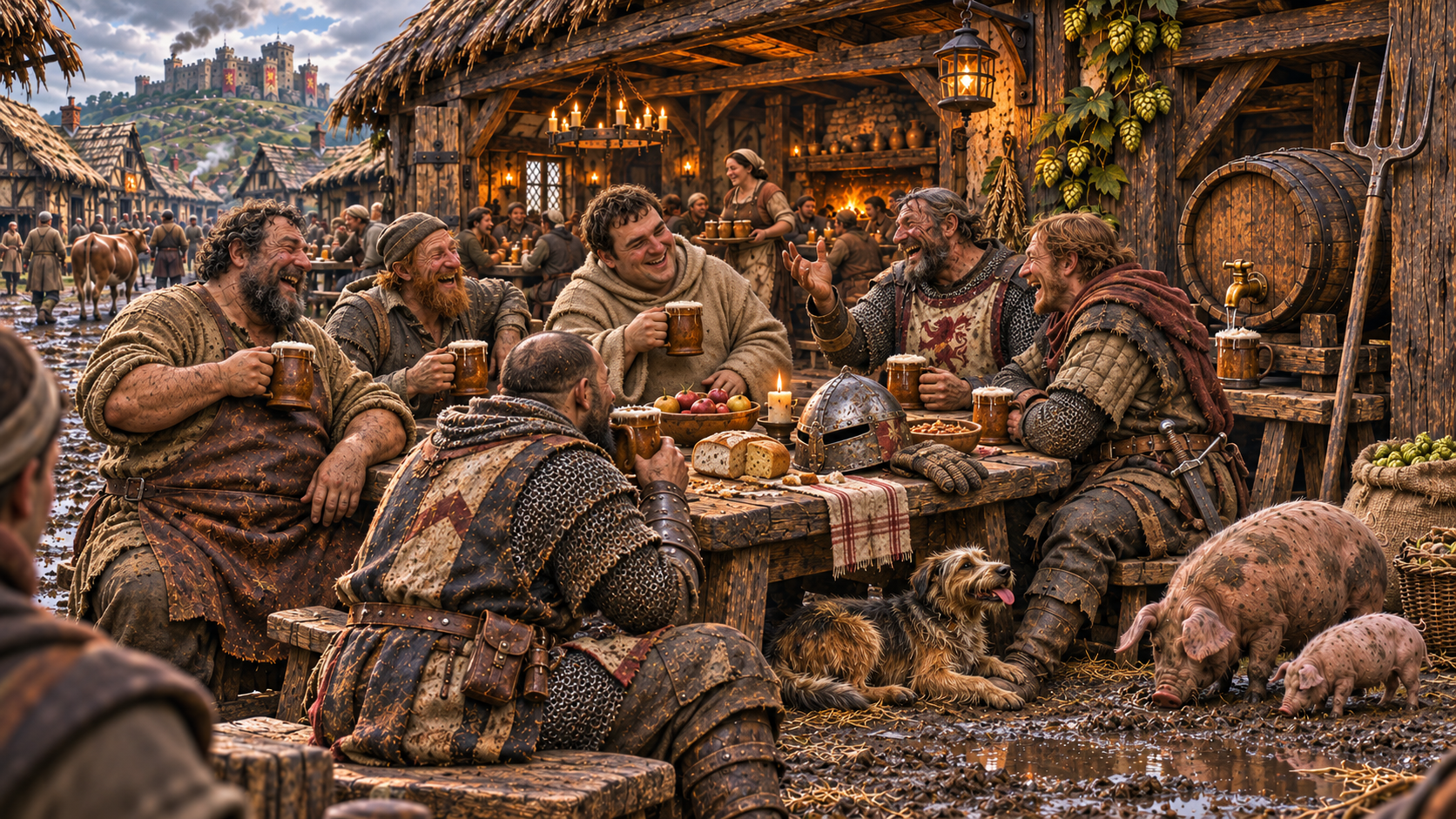
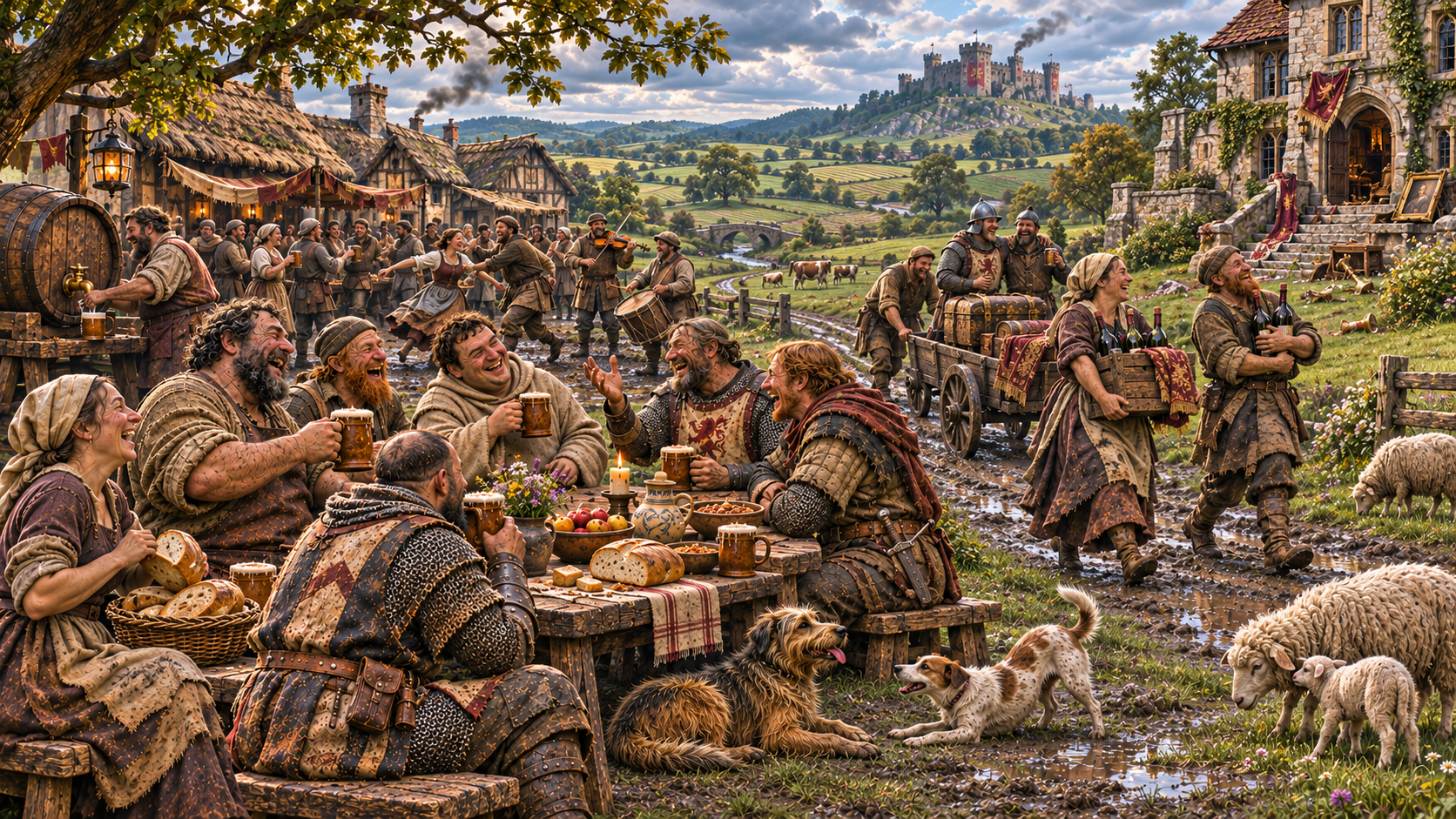
You’re the boss now. Your companions run the economy, and you can give them notes and get into the details when you want. Wood, stone, hens, sheep, crops, and rivers of beer.
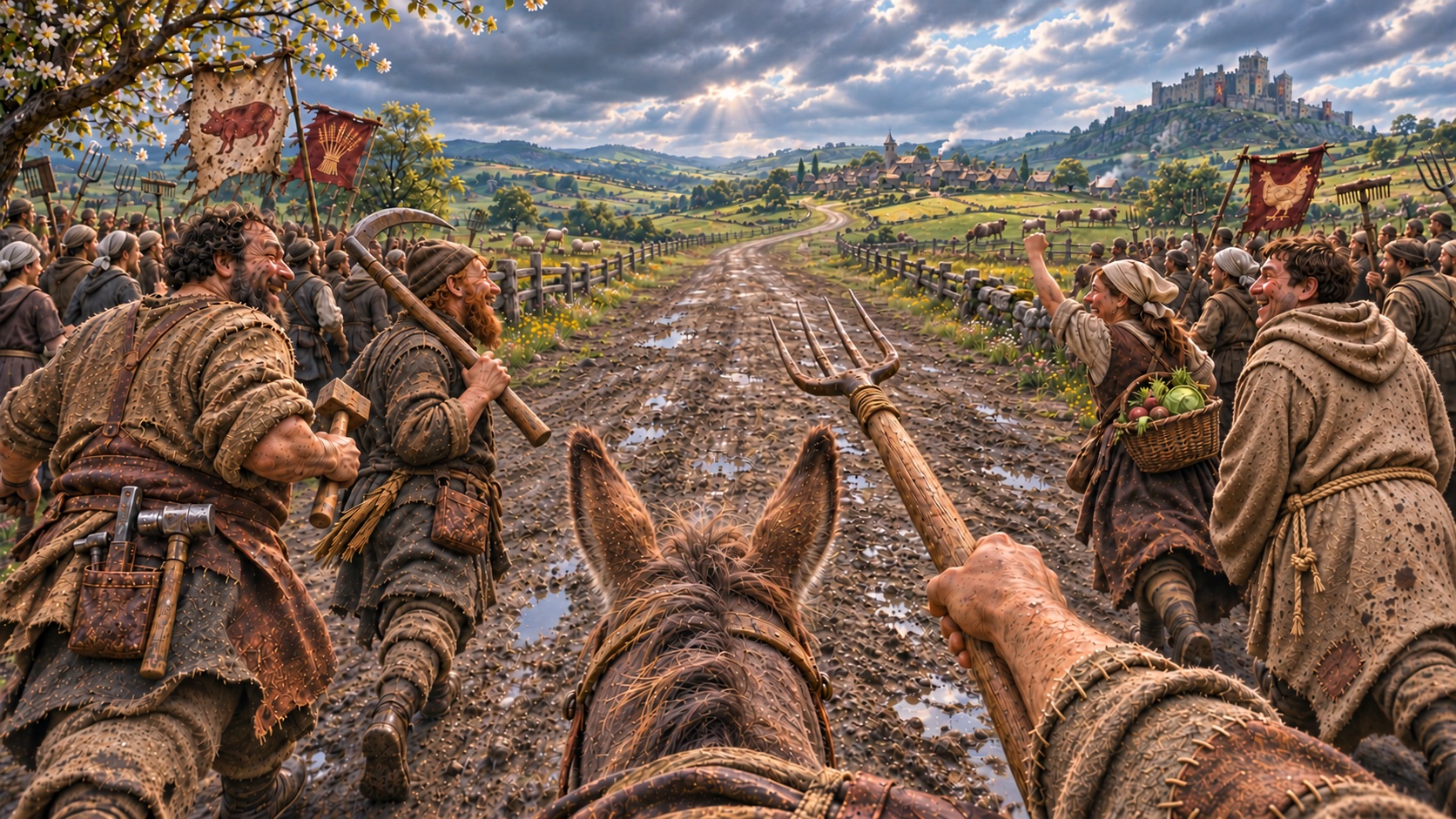
Inspired by Stronghold and Chivalry. Starring a nameless peasant with Duke Nukem’s attitude and a pitchfork.
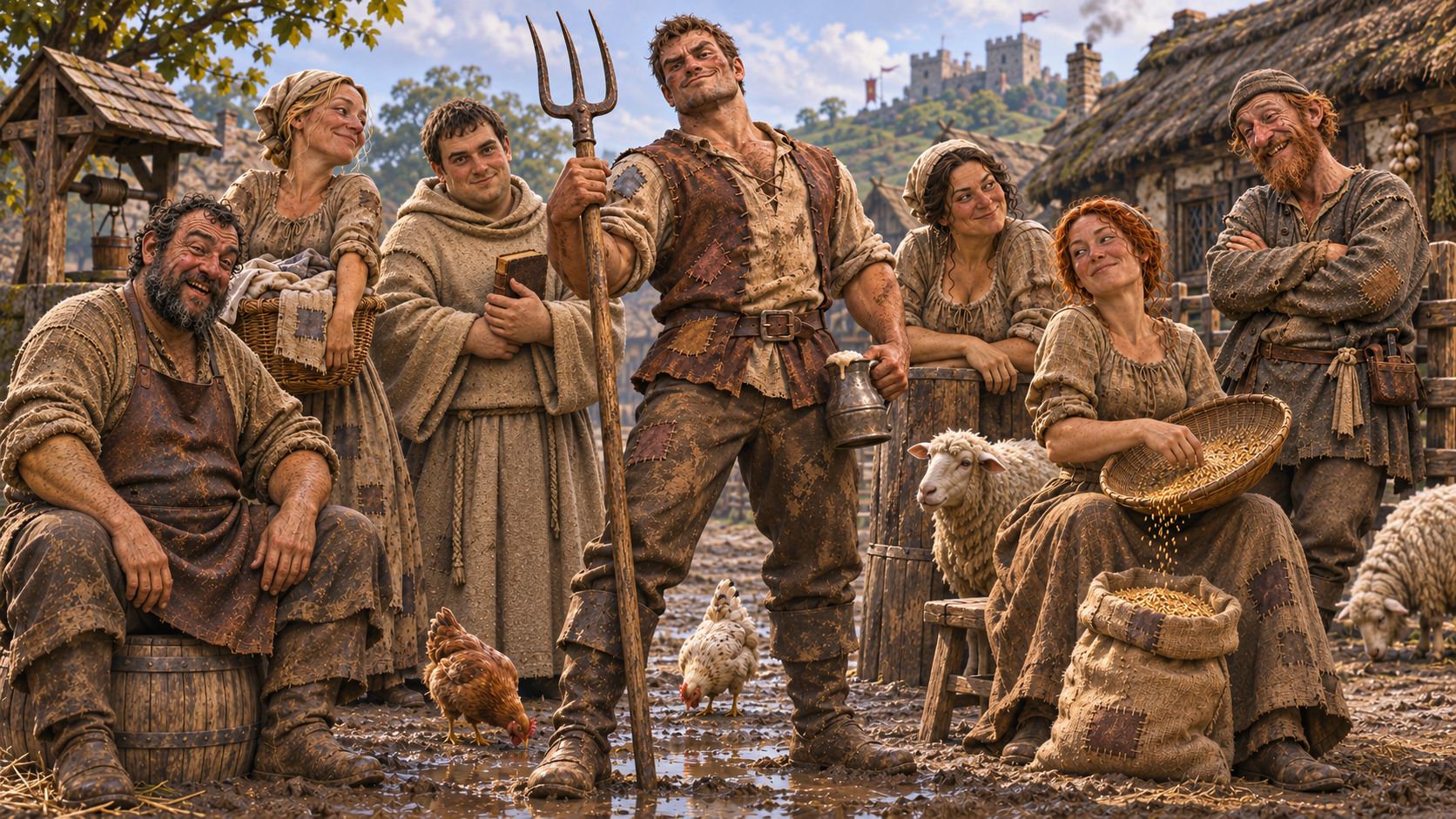
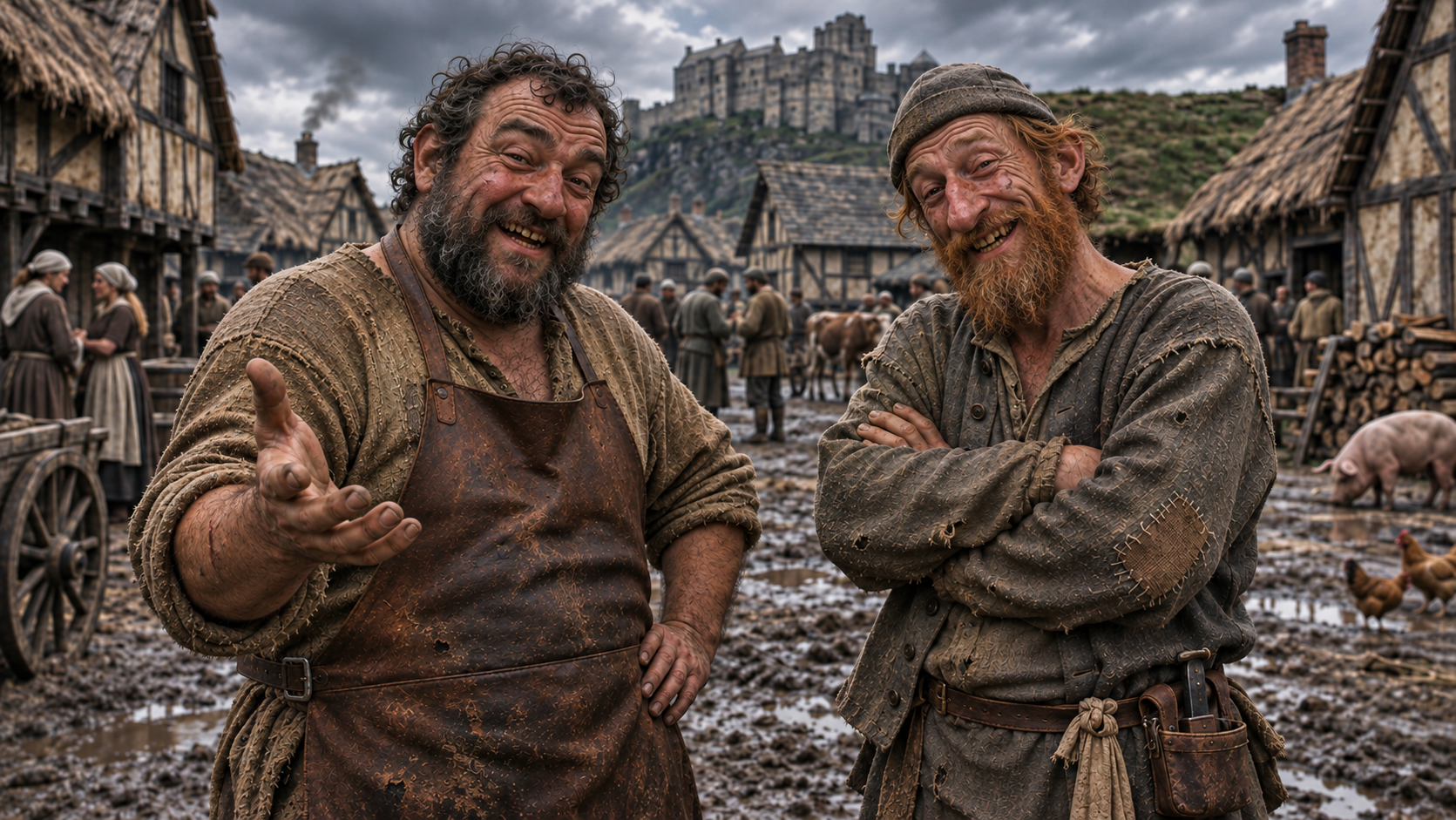
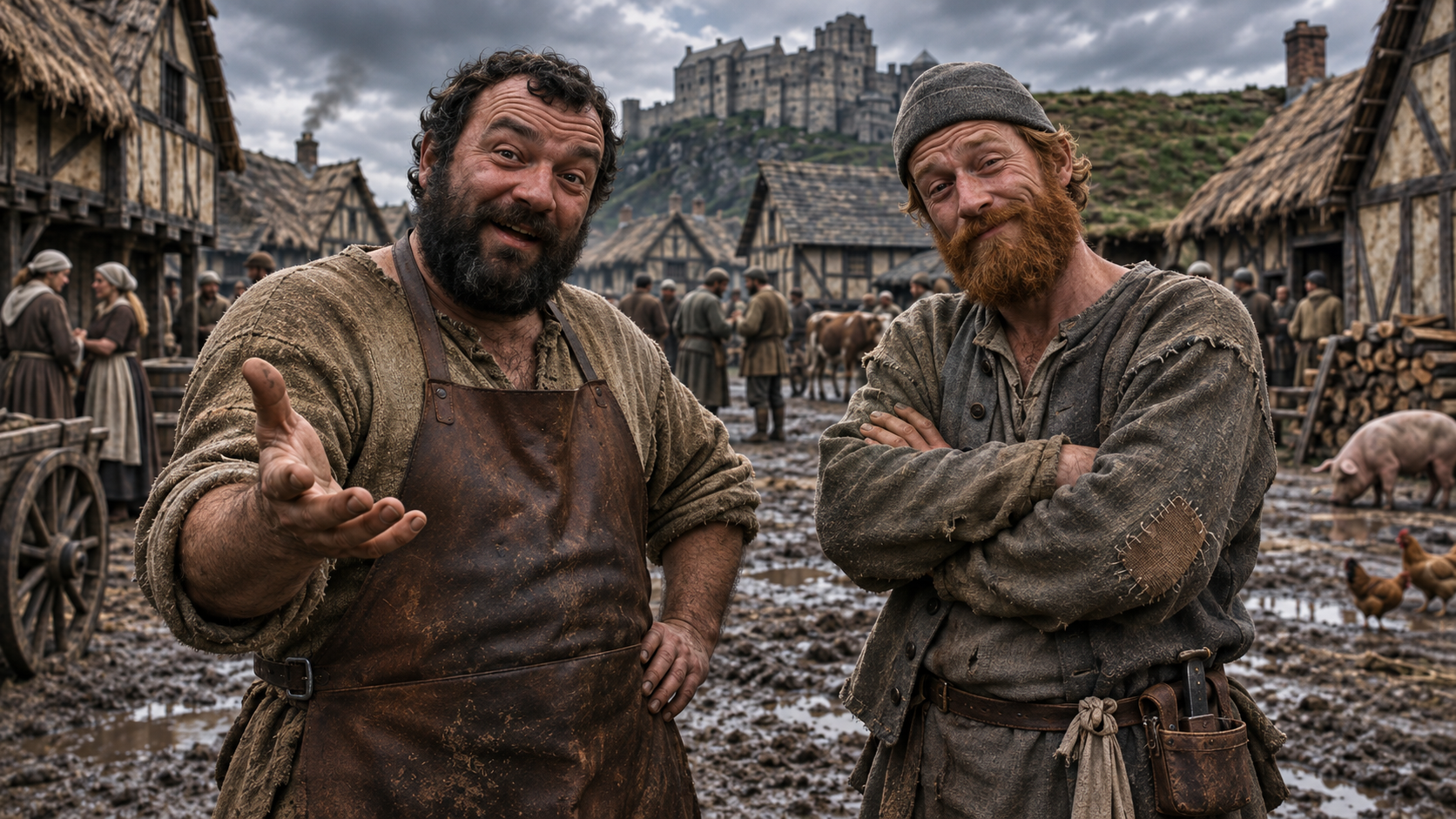
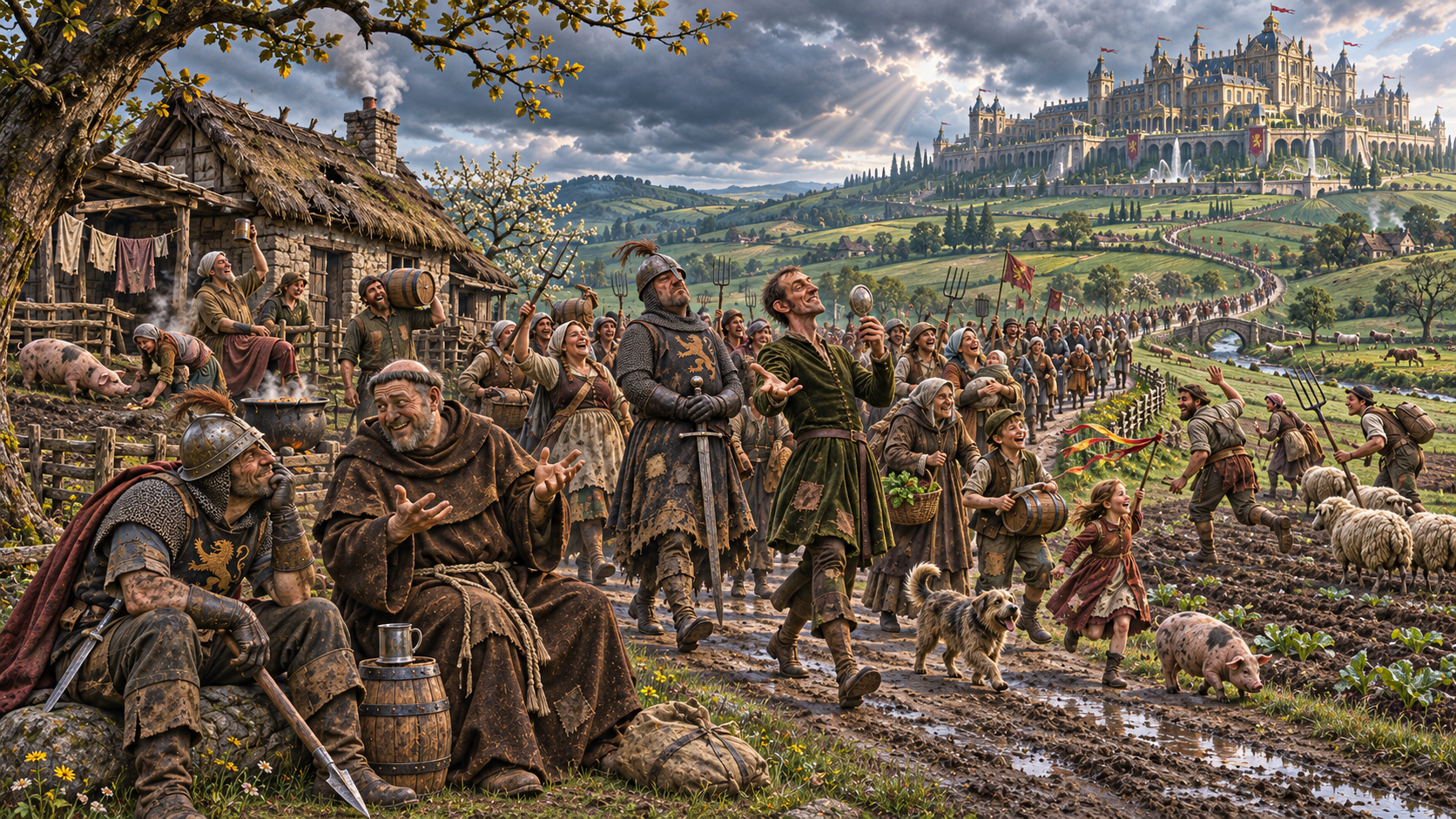
Meet the peasant, known in the project as Florian the Barbarian. He starts at his hut, gathers his things, finds his friends in the village, and heads with them to the Ferret’s muster.
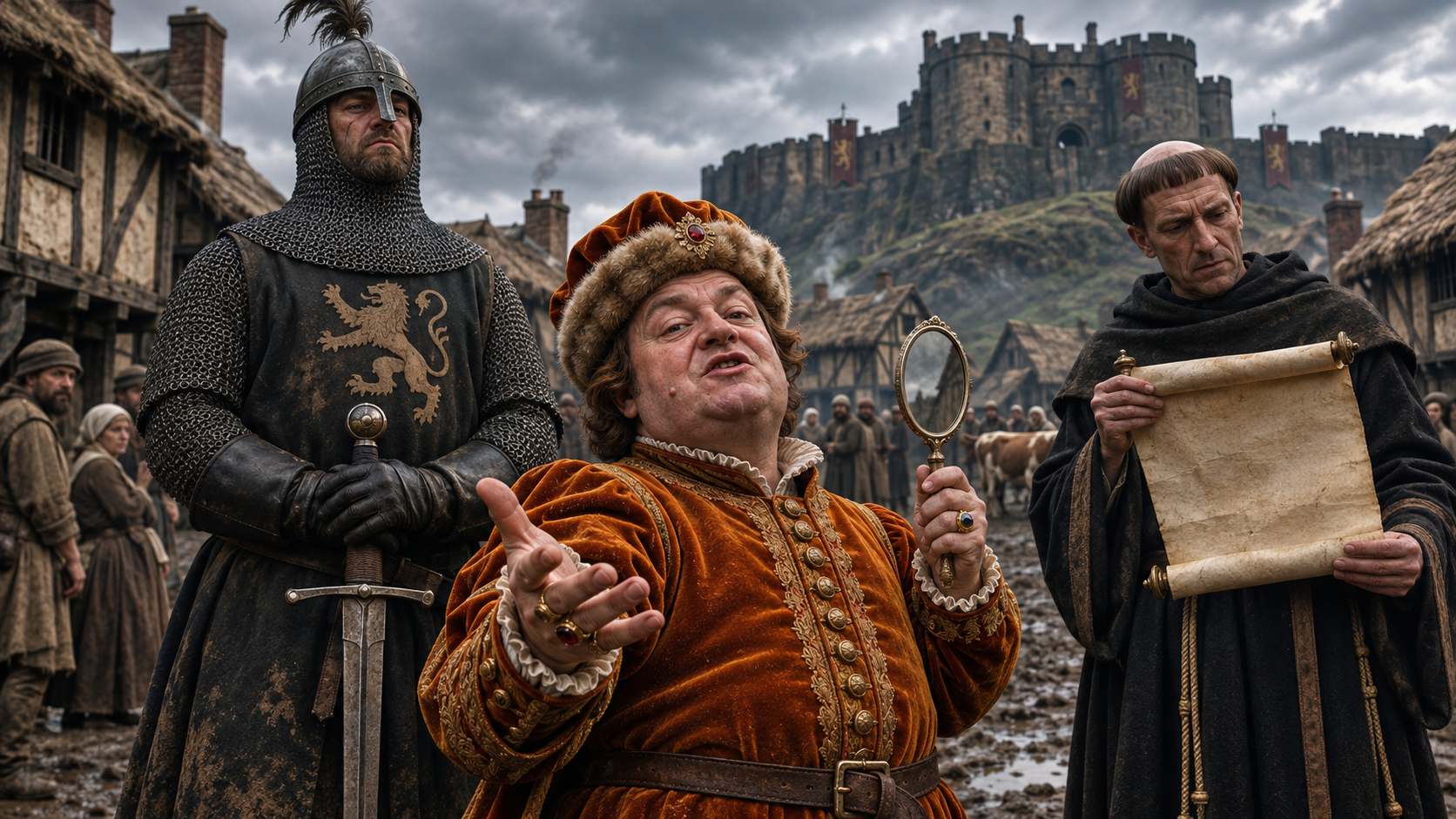
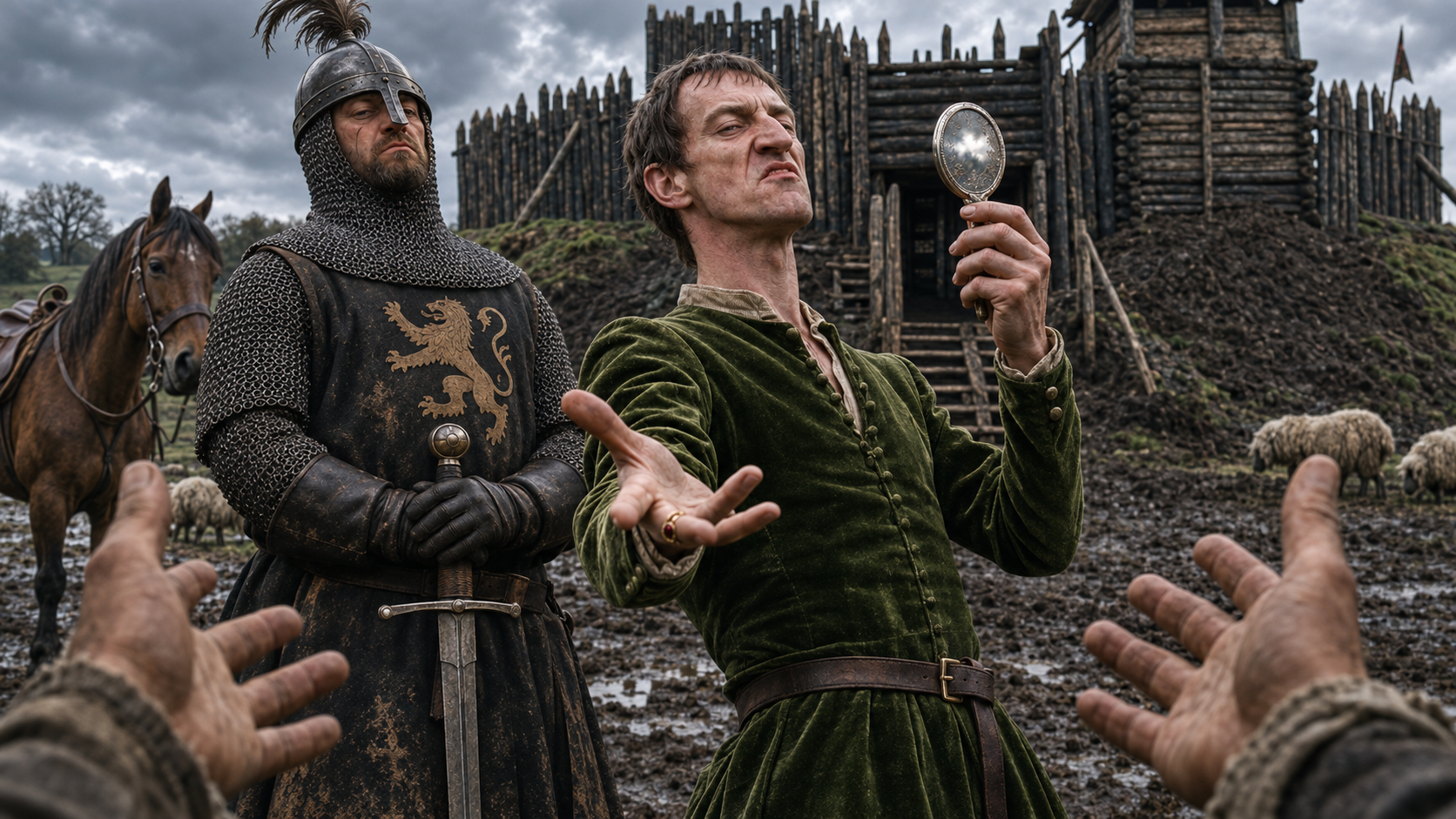
Then the news arrives. The stupid, inbred, lazy lord in the castle far away has decided that he needs to go and fight a muddy battle, over an insult somebody made at a drunken banquet.
Hell no.
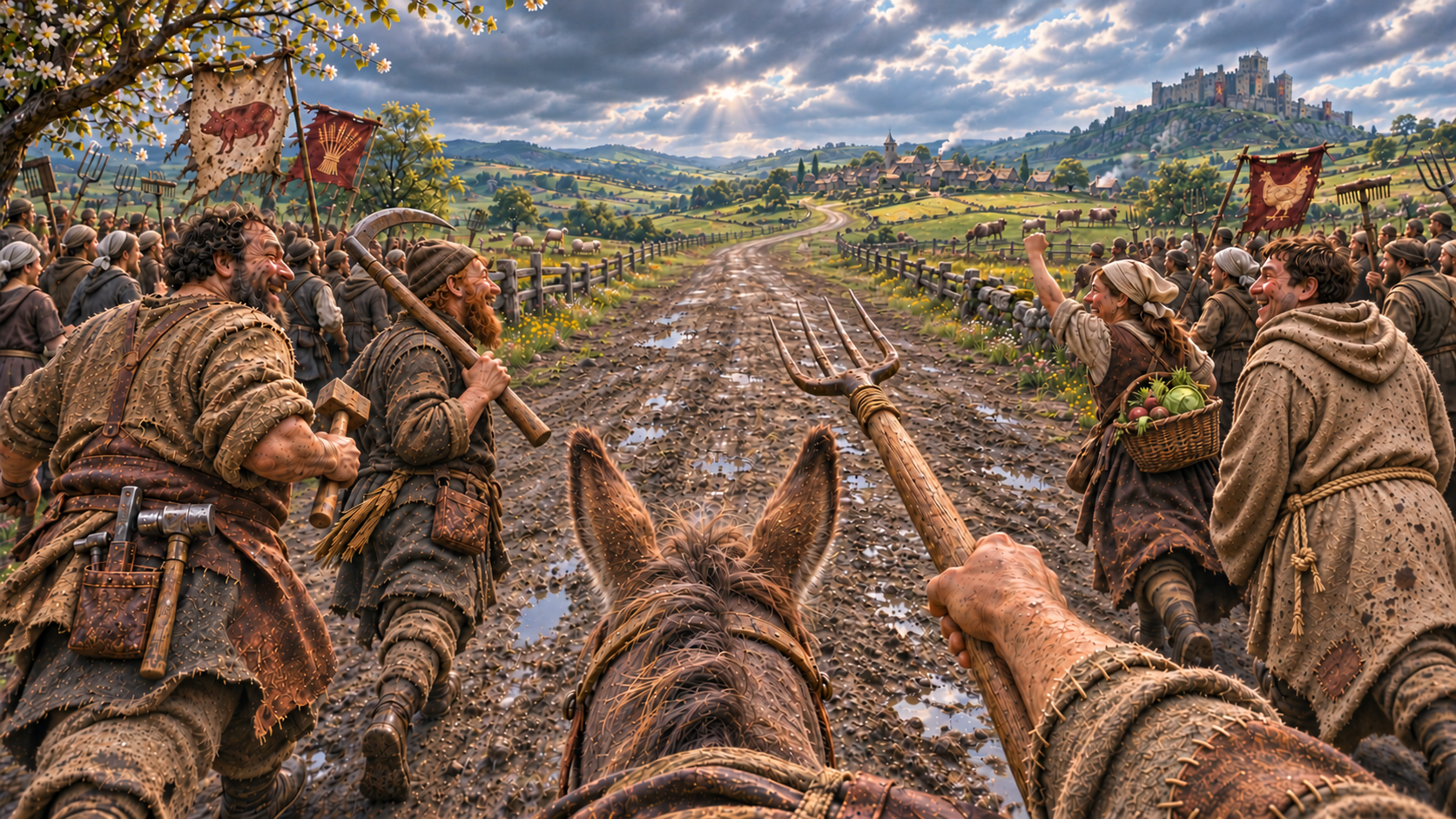
So he grabs a pitchfork, flattens the first noble who gives him a speech, takes the man’s fort, finds the man’s map, and starts working his way across it. Every little lord, village by village, all the way up to the castle. Kill the king. Take all his stuff.
You’re the boss now. Your companions run the economy, and you can give them notes and get into the details when you want. Wood, stone, hens, sheep, crops, and rivers of beer.
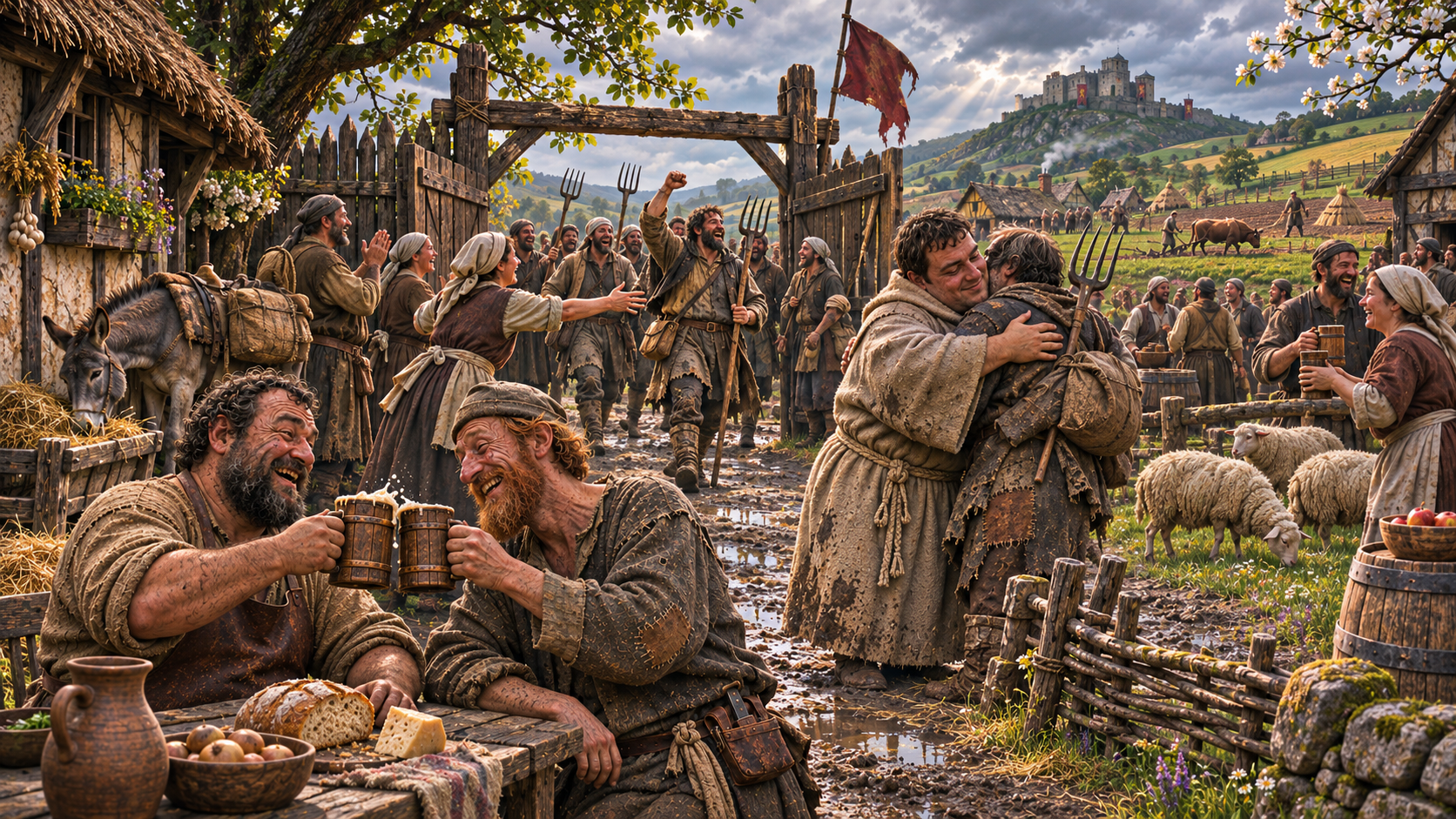
No clicking little men around. No formations. No patrols. Your archers climb the towers, your fighters march out and find trouble, and your monks go preach at the enemy. You run the village. They do the rest. Oh yeah, and having lots of beer helps.
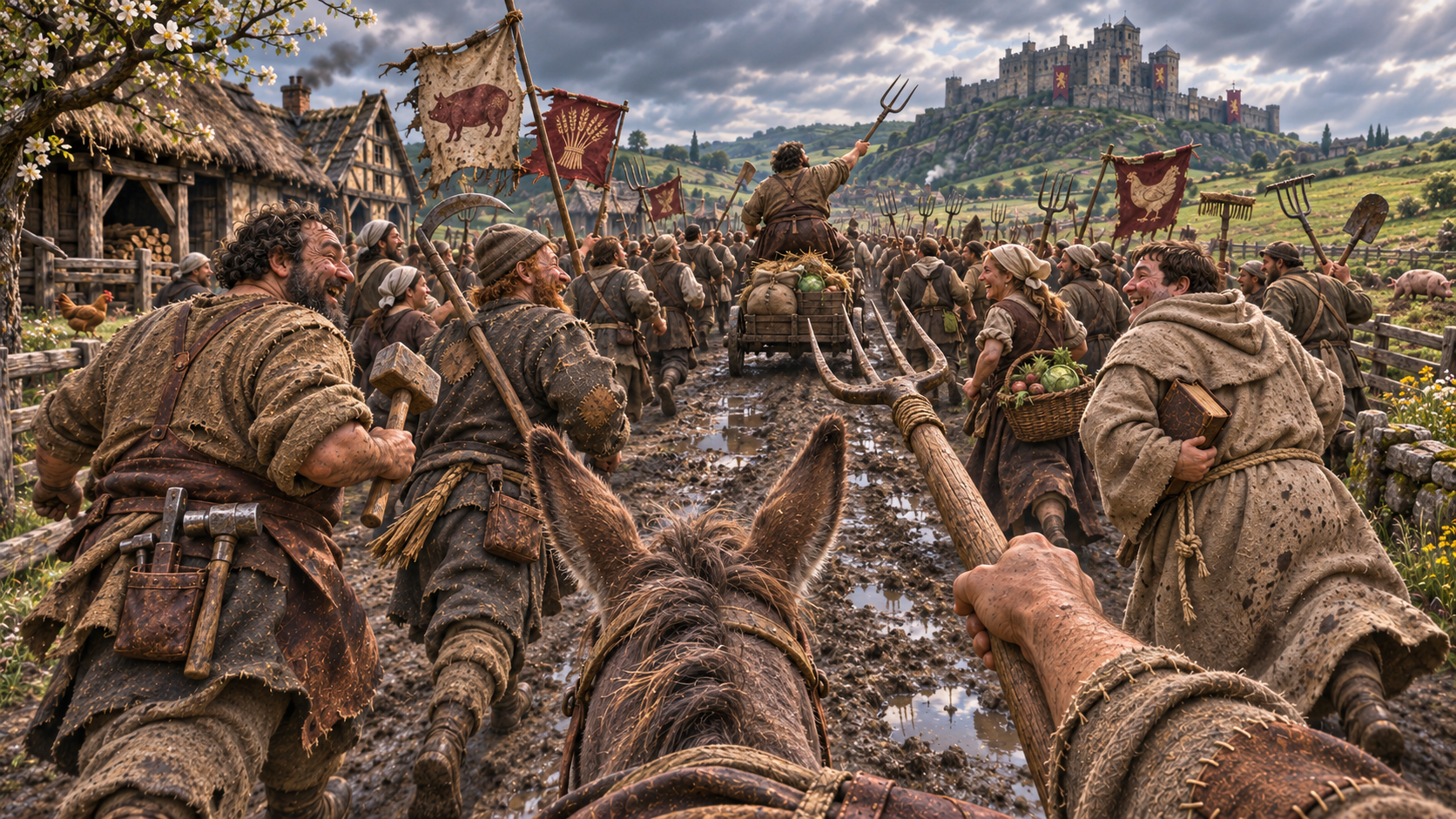
Enough planning. Grab your best pitchfork or farm tool, because it’s time to go chop some lords. Hand-to-hand, in first person or a chase view behind the peasant, in the mud with everybody else. They swing badly. You do not.
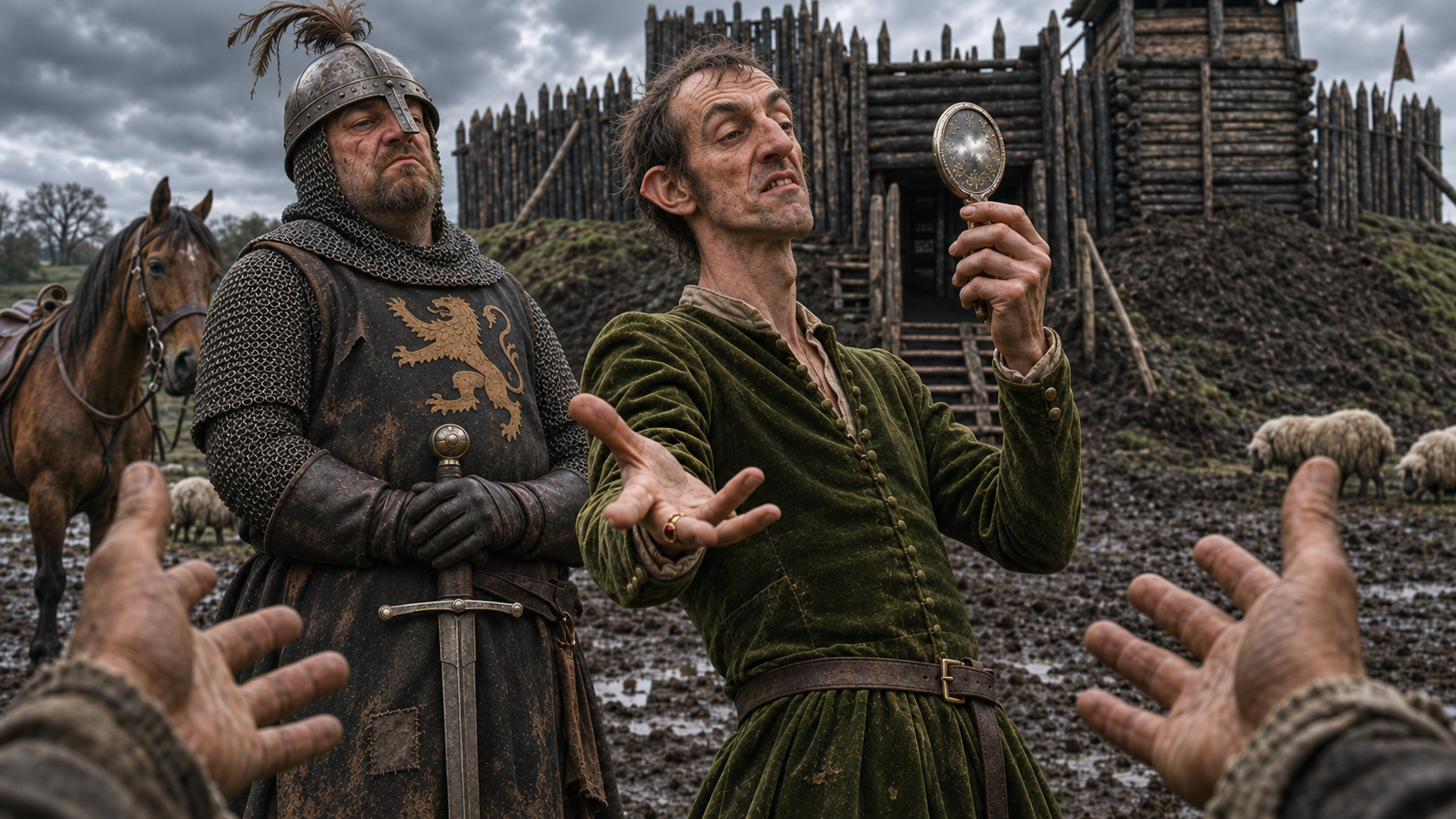
Roll up at his gate with every peasant you’ve got and call the lord out by name. One on one, three on three, or six on six against his best men. Win, and the village is yours.
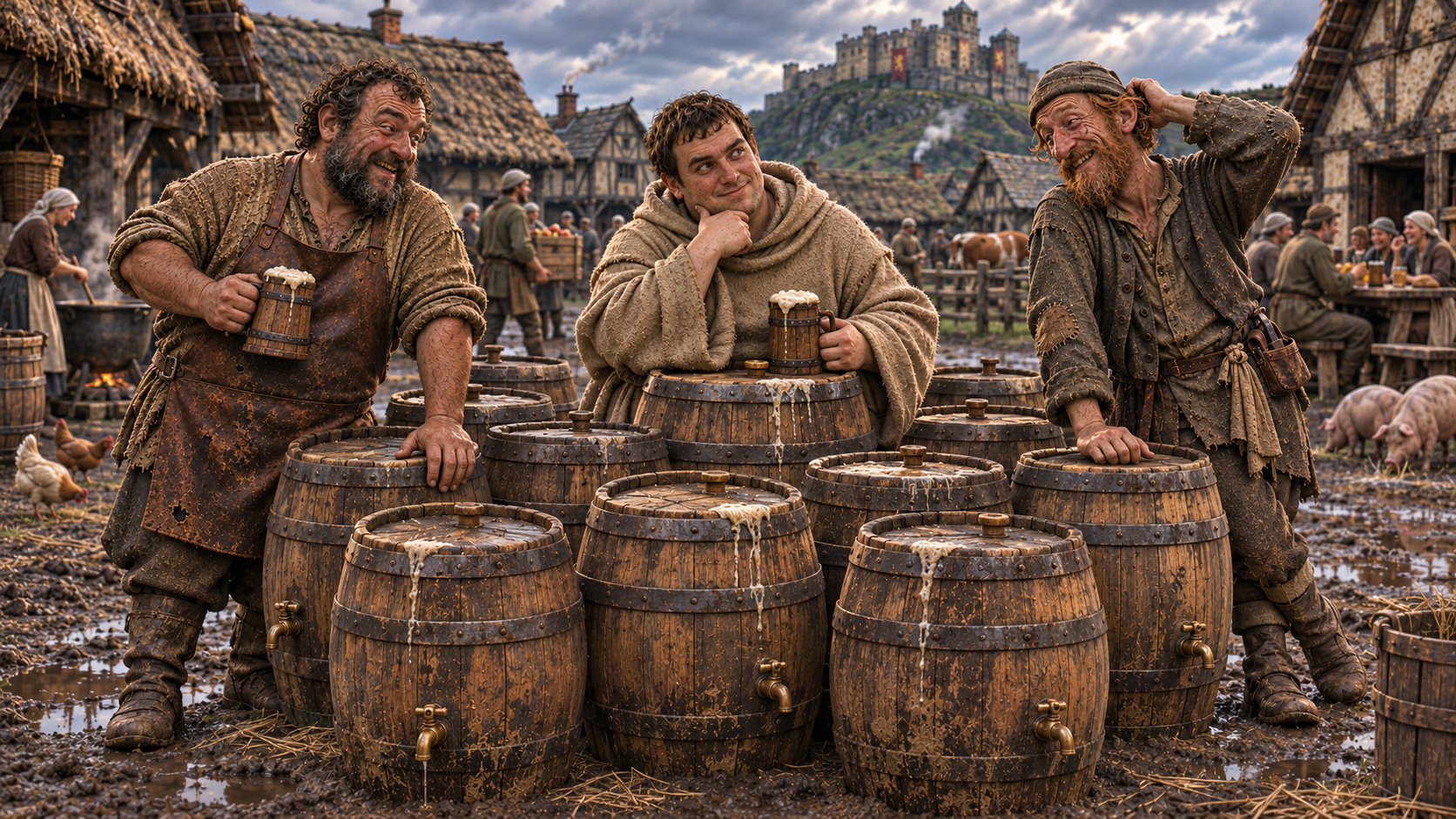
Some castles fall without a fight. Send in monks carrying big kegs of beer, buy the gatehouse a round, and watch the gate swing open. Rebels stroll in. Nobody even draws a sword.
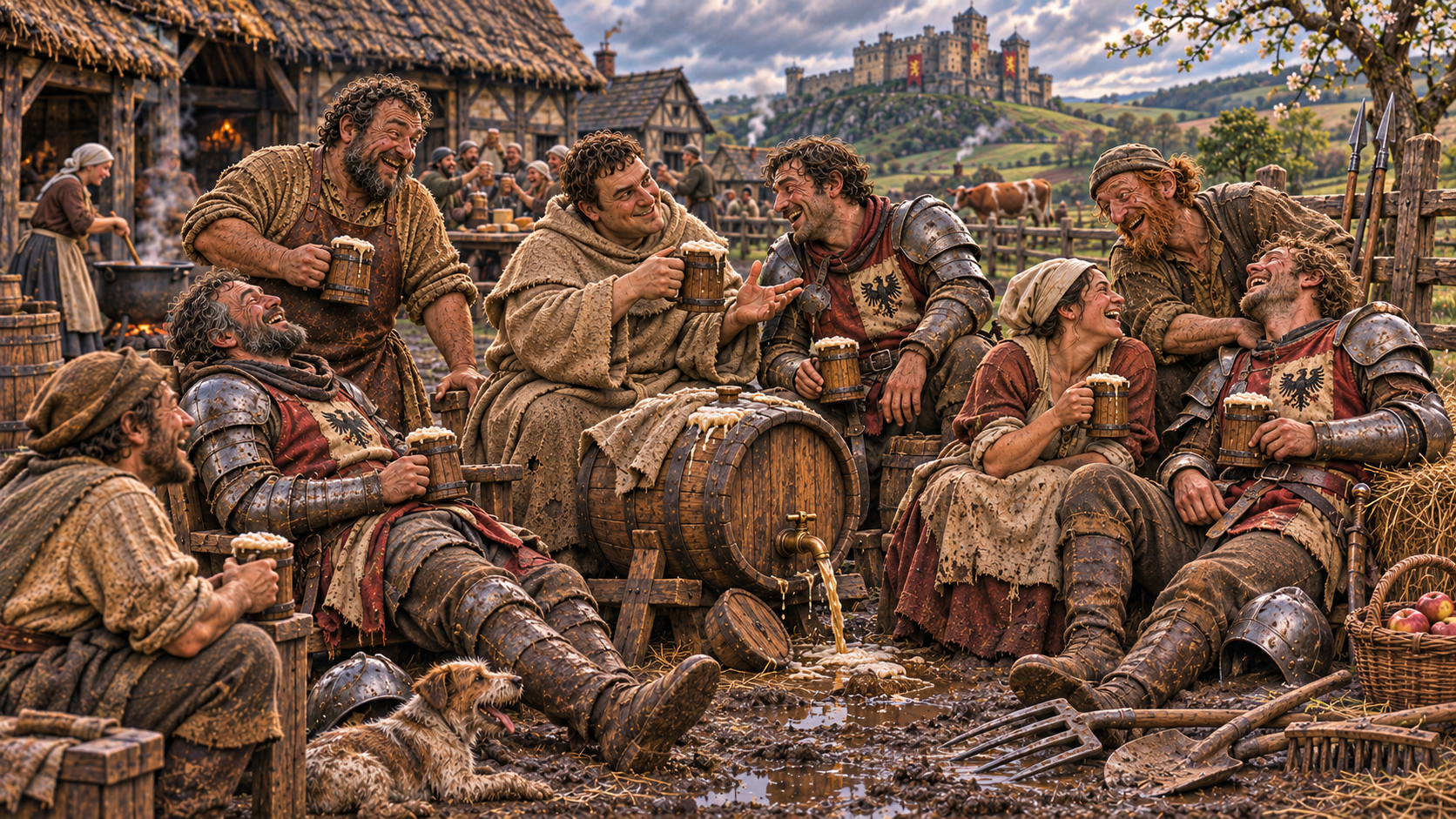
Your monks hand the other side’s soldiers beer and preach liberty, democracy, freedom and justice, and they walk over to your side. Three monks round one soldier and he’s yours. Every defector brings what they know, and what they know builds better stuff.
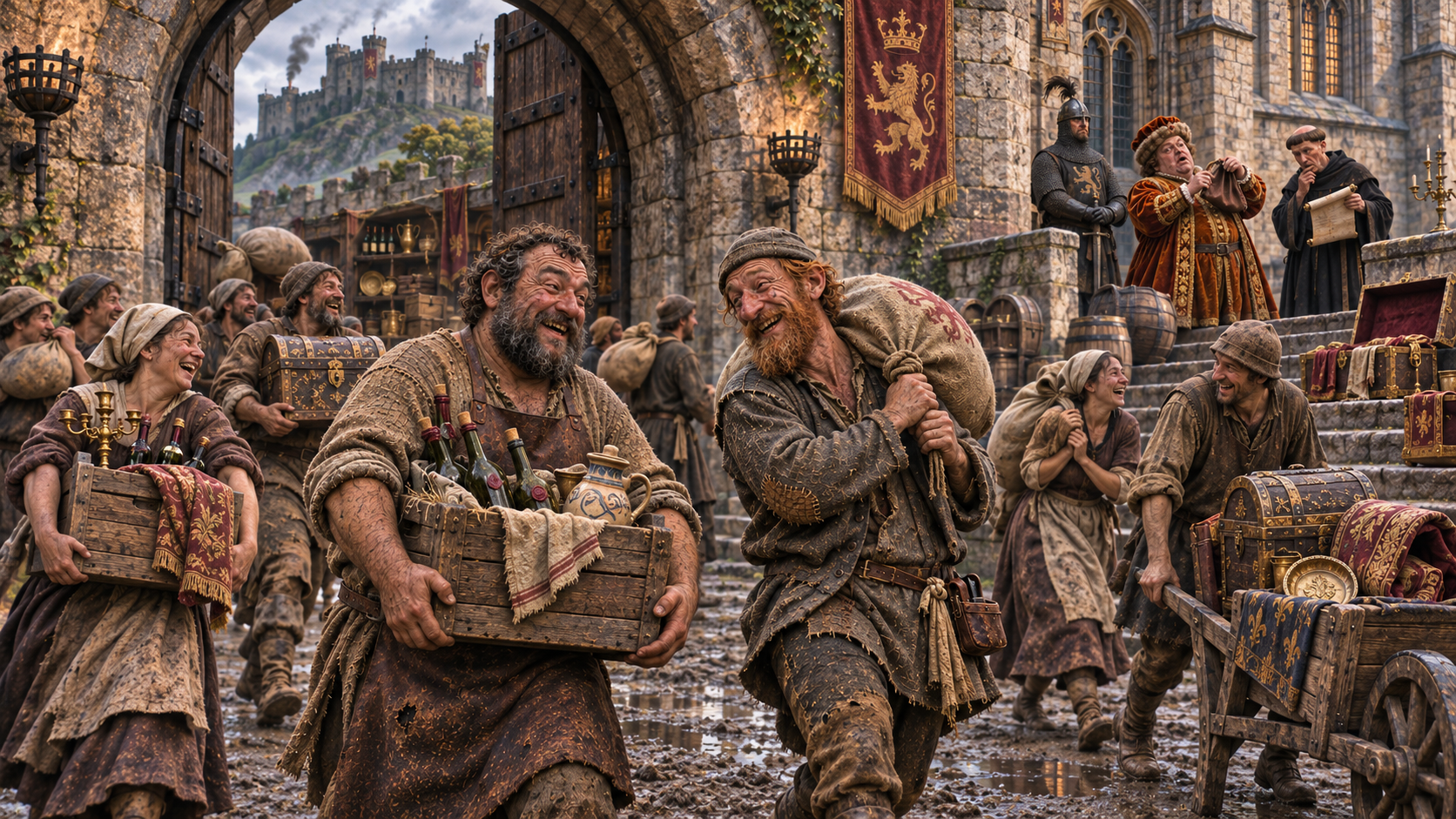
You start with sticks and a pitchfork. Every lord you drop has something sharper, so take it. Haul the loot home to the village, fill the kegs, and live in style. Then do it again, all the way to the king, who has the most stuff of all.
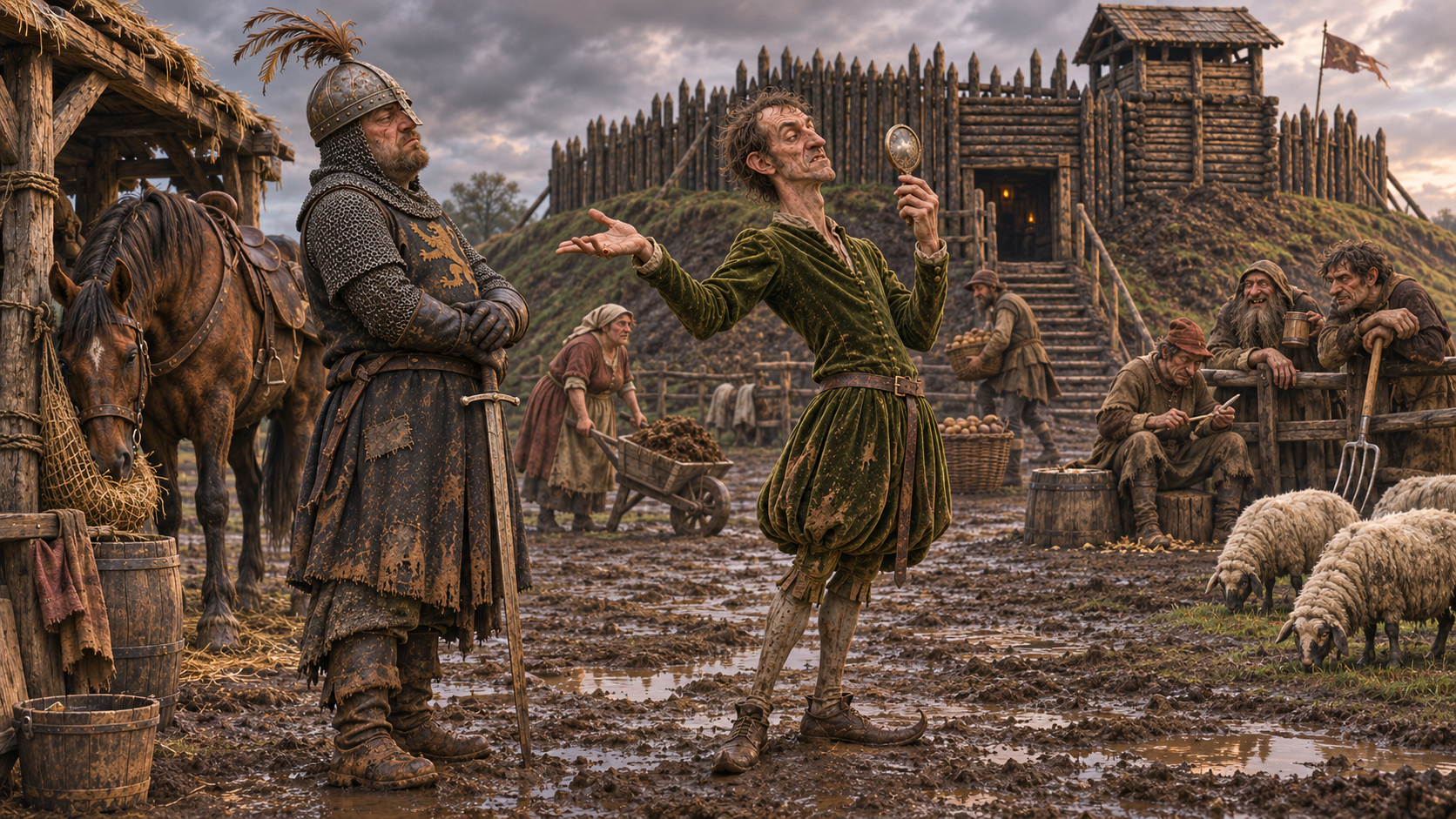
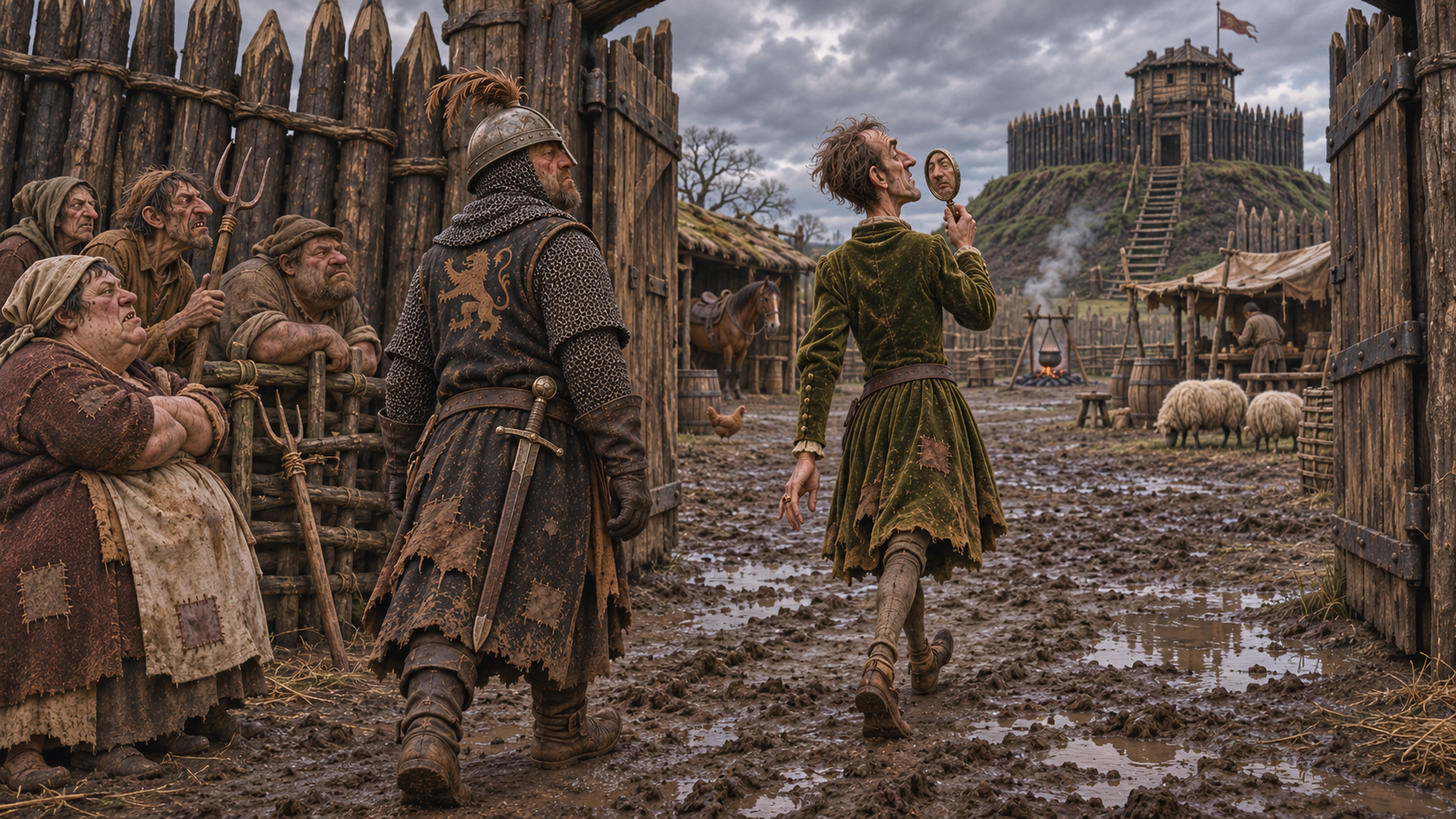
The Ferret ends up trussed in his own motte and bailey while the peasants help themselves to his things. He does not take it quietly. His twin brother, he promises, is coming to rescue him, with better men and far more loyal ones, and what exactly will they do then? They could never replace him. He ran this village.
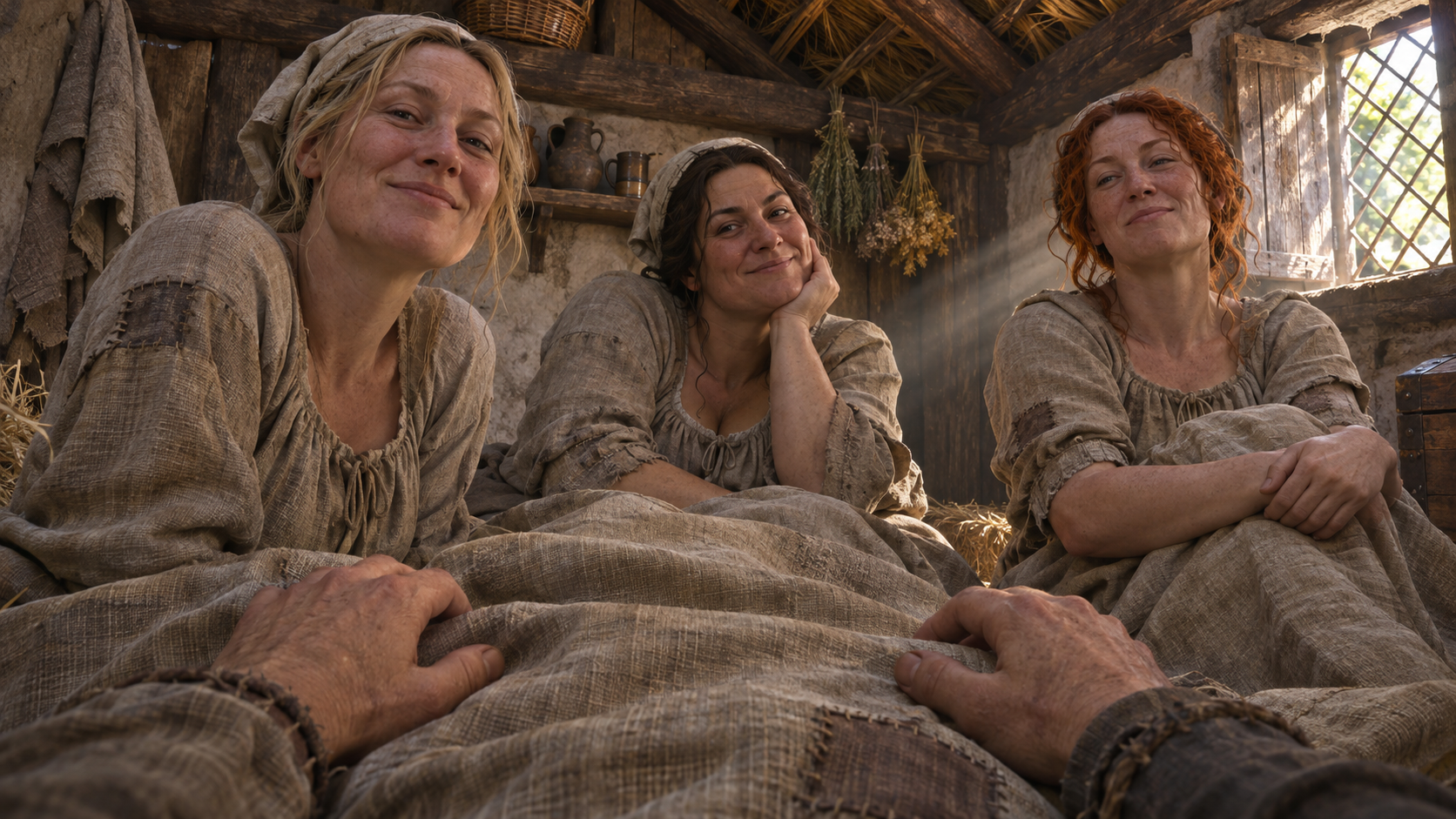
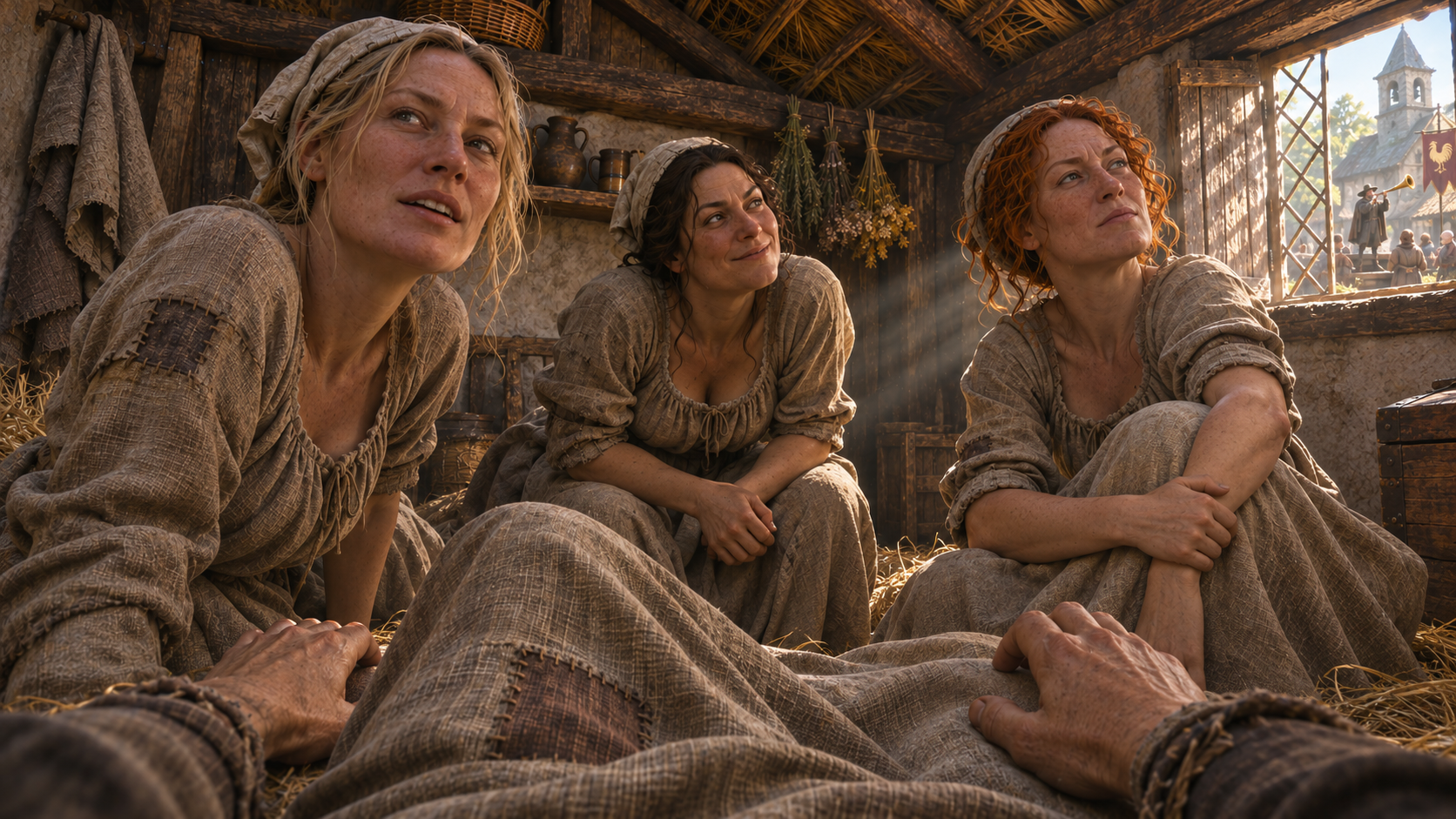
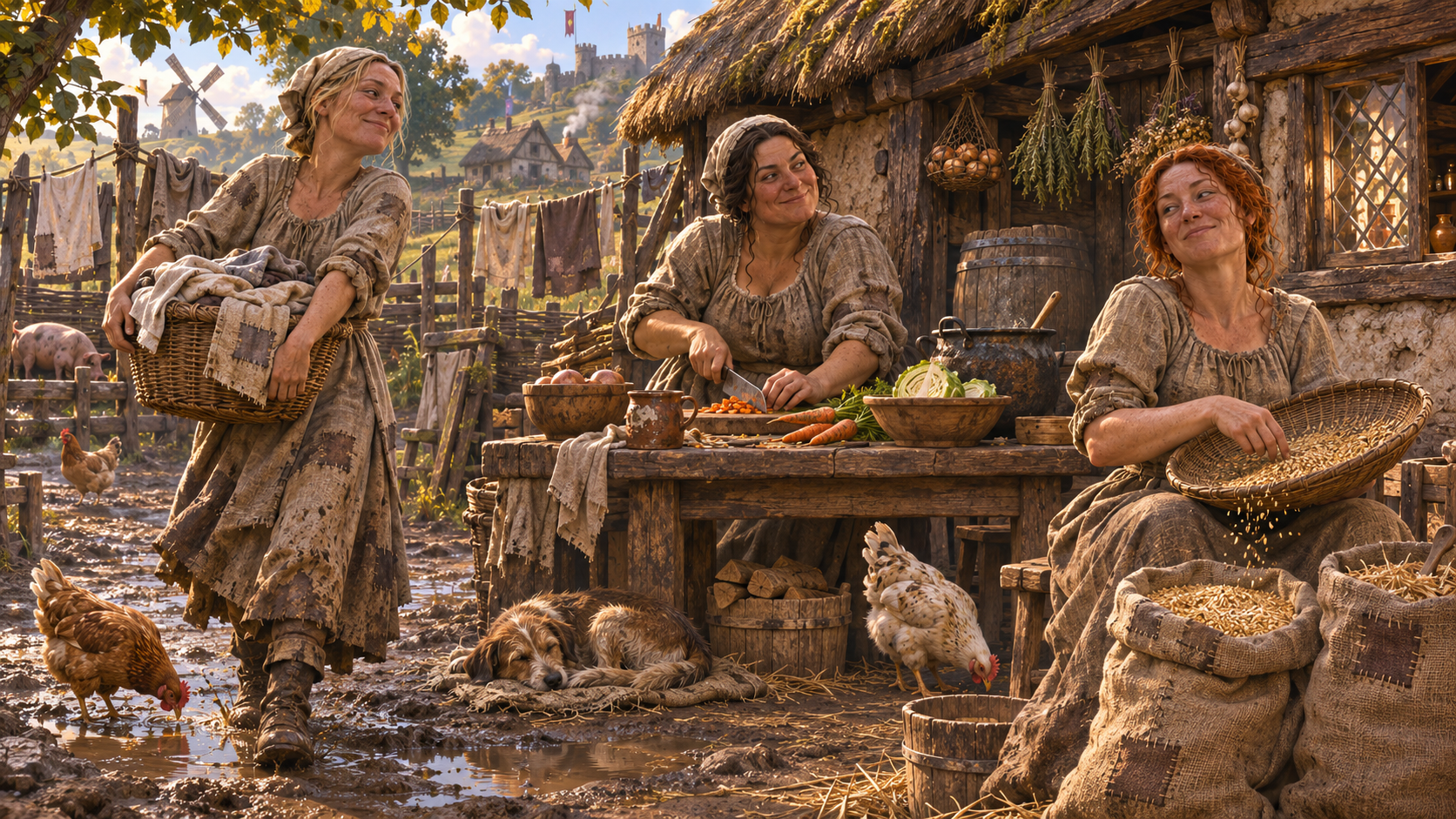
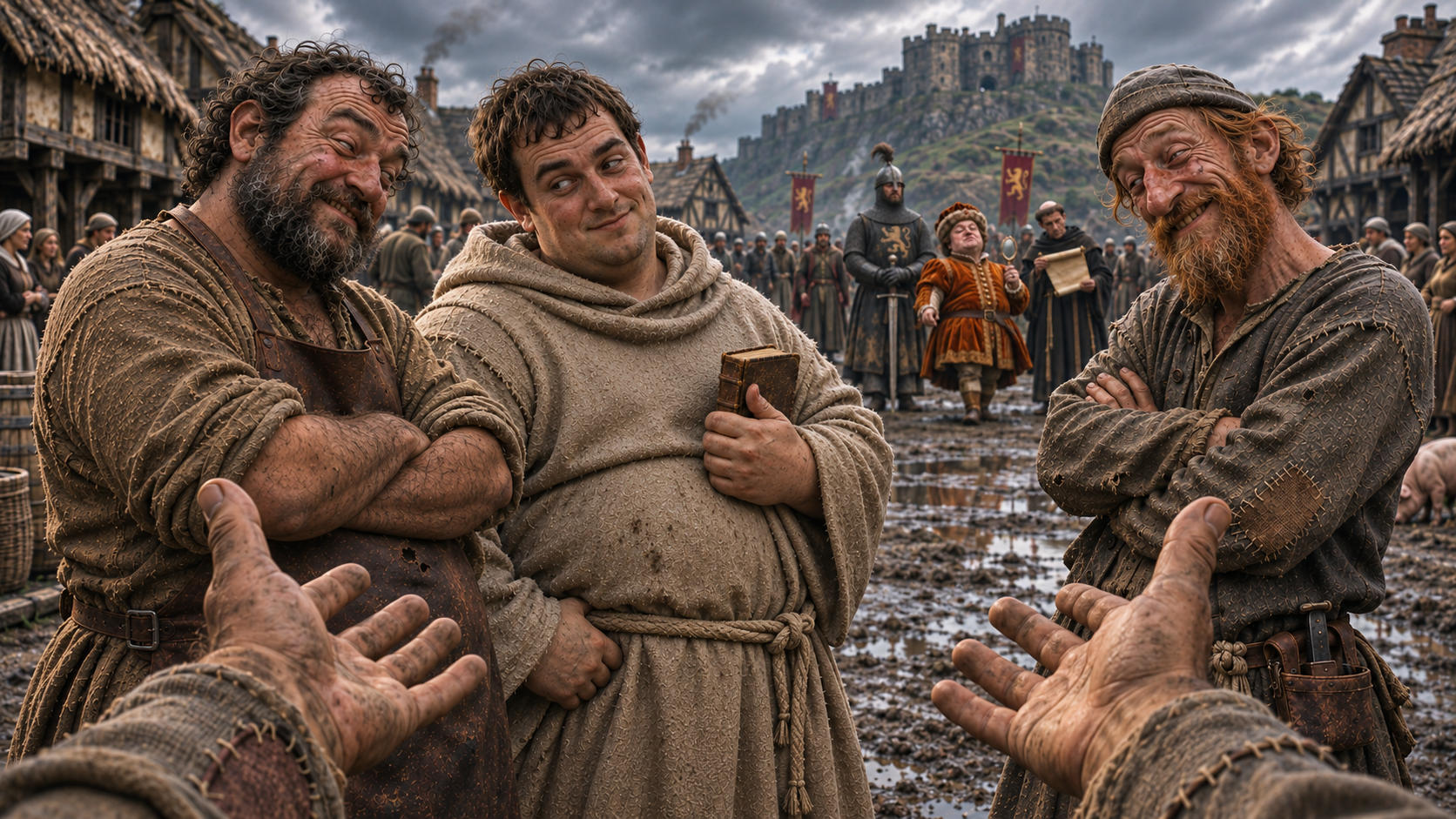
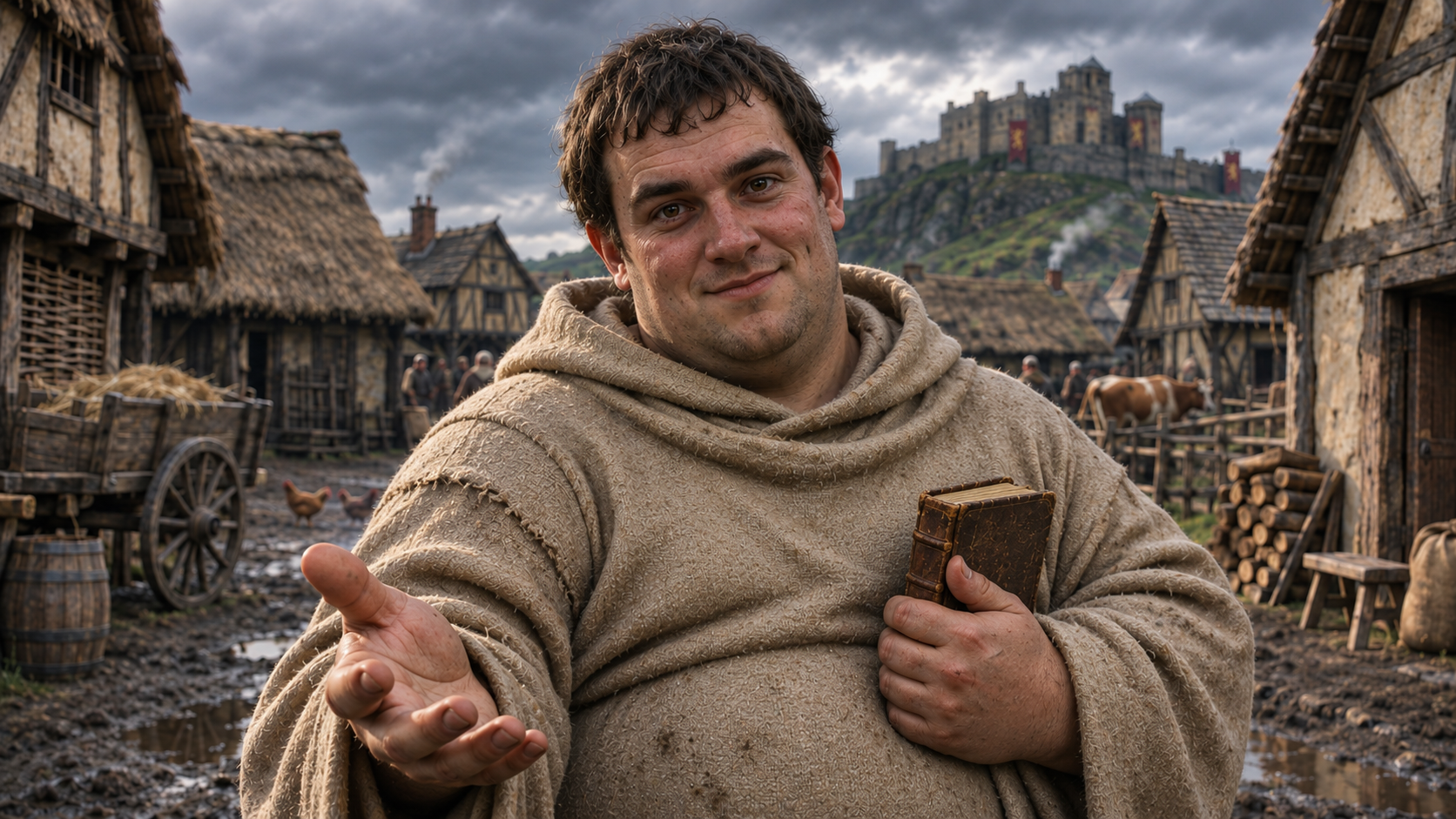
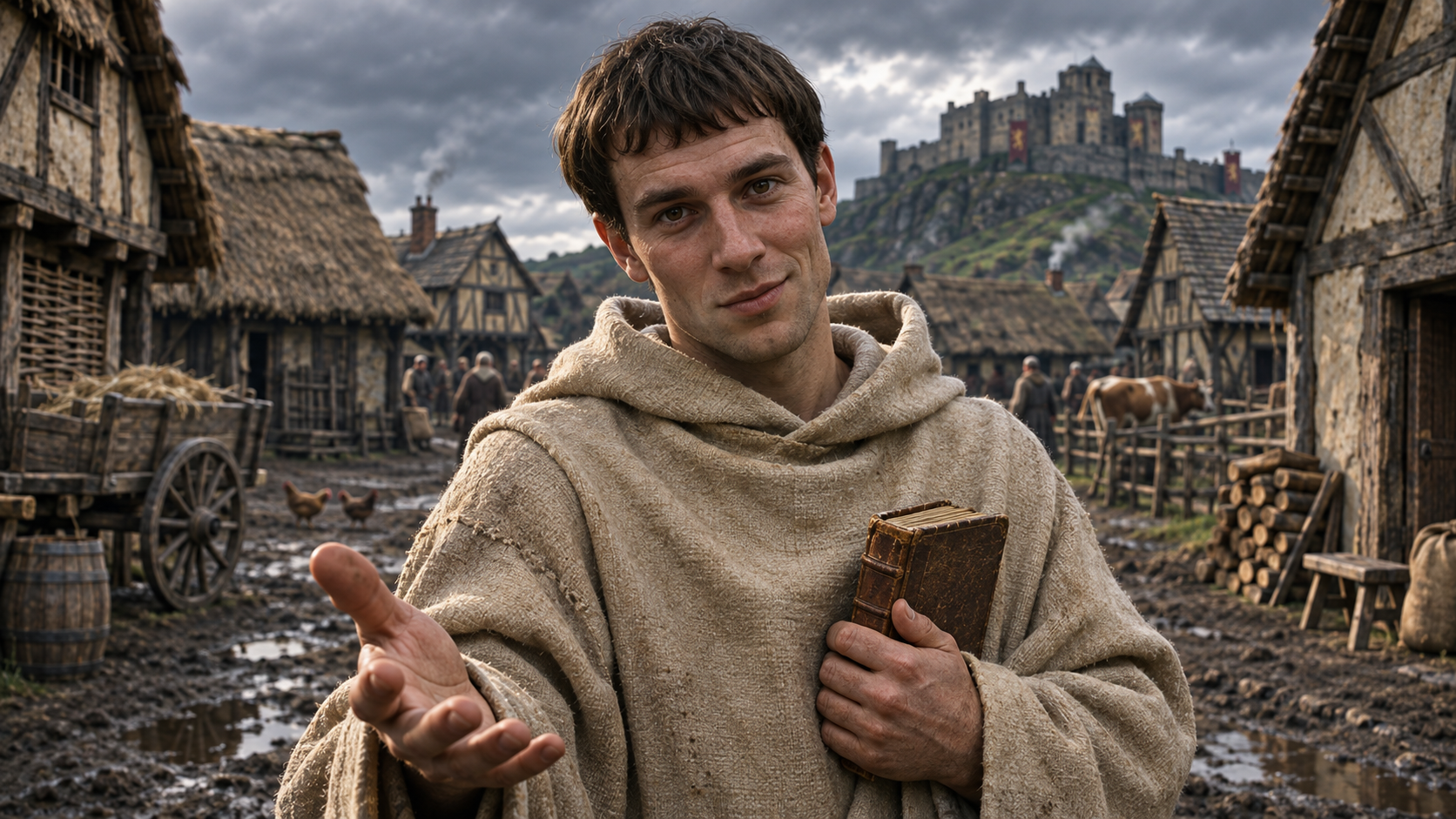
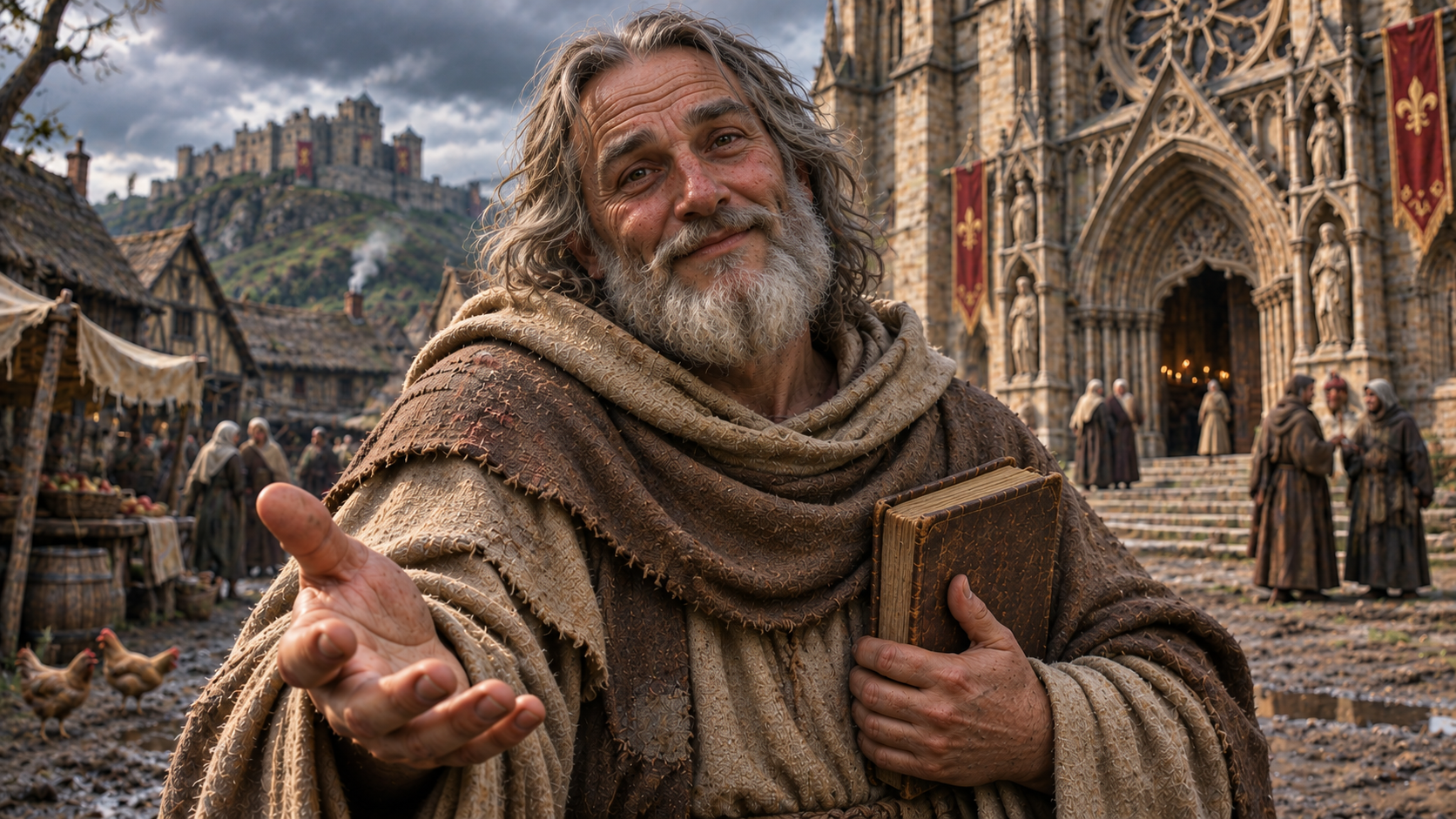
That is when the companions speak up. The craftsman will handle the crafting. The farmer will handle the farmers and make sure everybody eats. The three sisters will brew the beer. And the monk will look after the flock and bring more of them to the cause, as long as somebody does the smacking with the pitchforks. The companions are Ned, Ted and Fred; the sisters are Mary, Maria and Marla.
Medieval instruments with punk energy: harp and lute, leather canvas drums, and a crowd shouting “hey” like a folk dance. Early generated music, still being tuned.
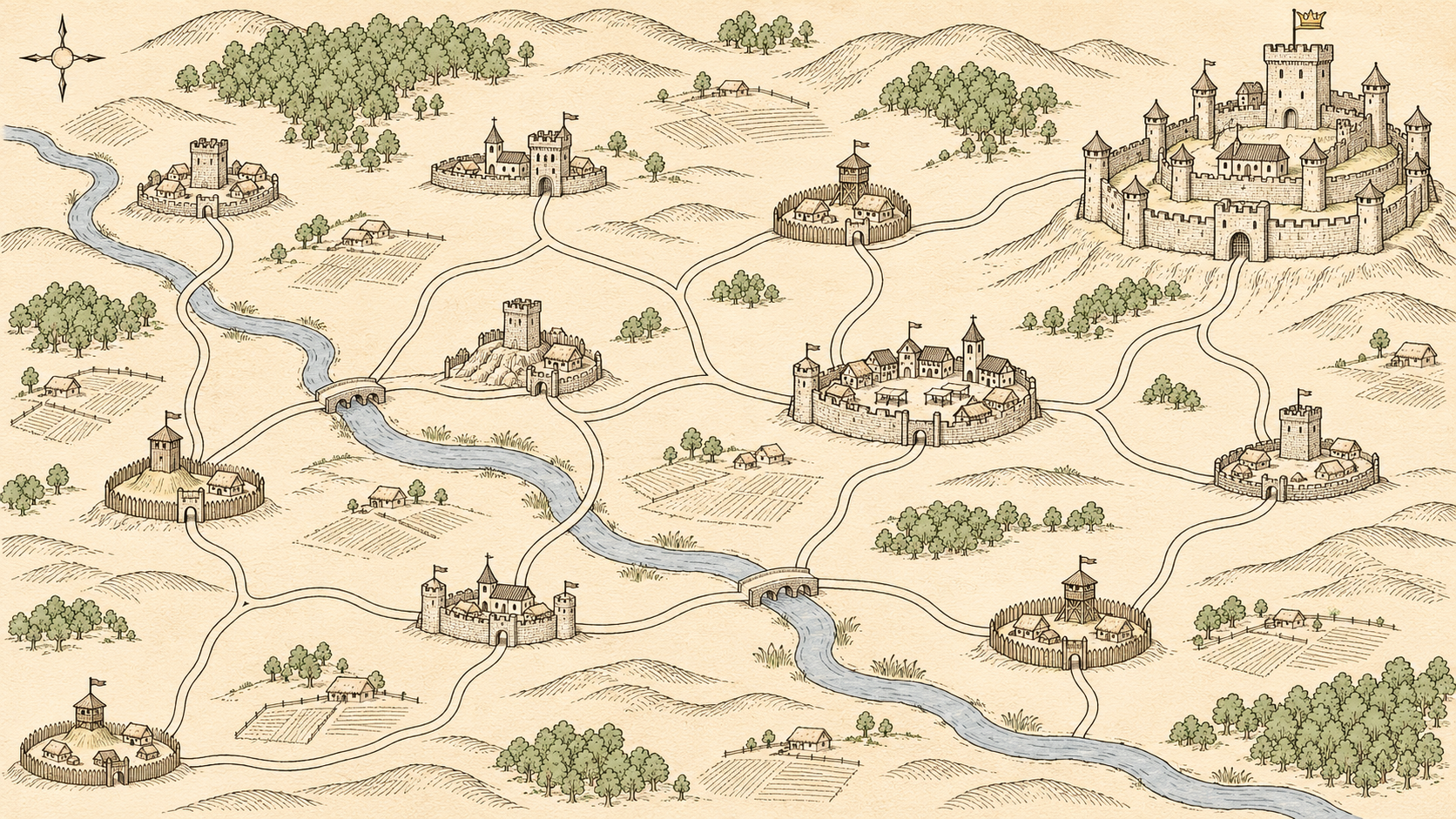
Found in the Ferret’s very modest noble chamber, among his books. Now it’s yours. Pick the next village, spread the revolt, and bring your finds home. Fame spreads from home, while the crowned castle waits in a corner. The map below is the approved art reference; the playable map is drawn for the game.
Find the scattered armour of the true king to reach the castle; the helmet is at home. Some places are marked. A monastery. A place that is particularly well fortified. A beautiful maiden who needs rescuing. And one village that, allegedly, has a mythical beast. Yes, we are going.
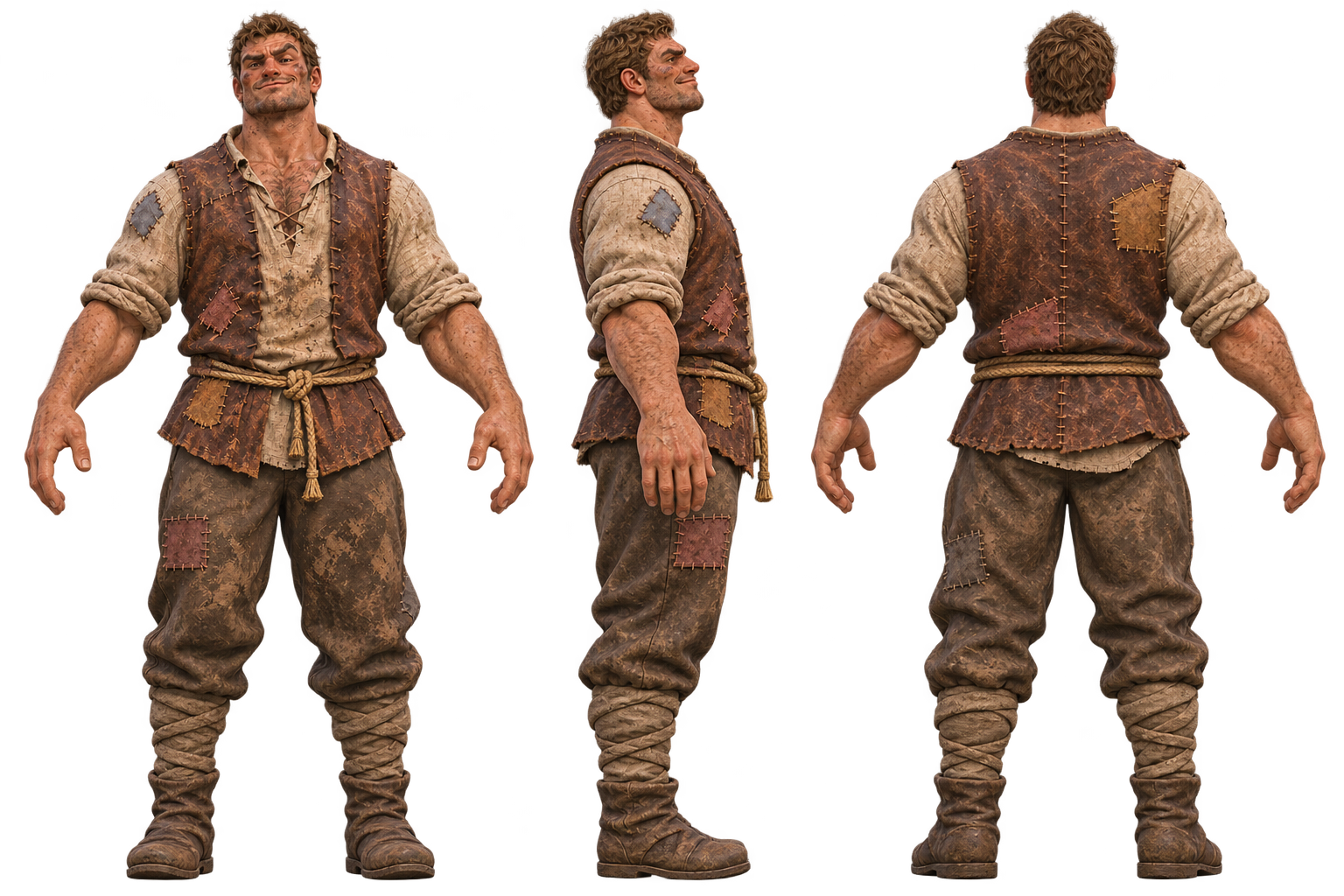
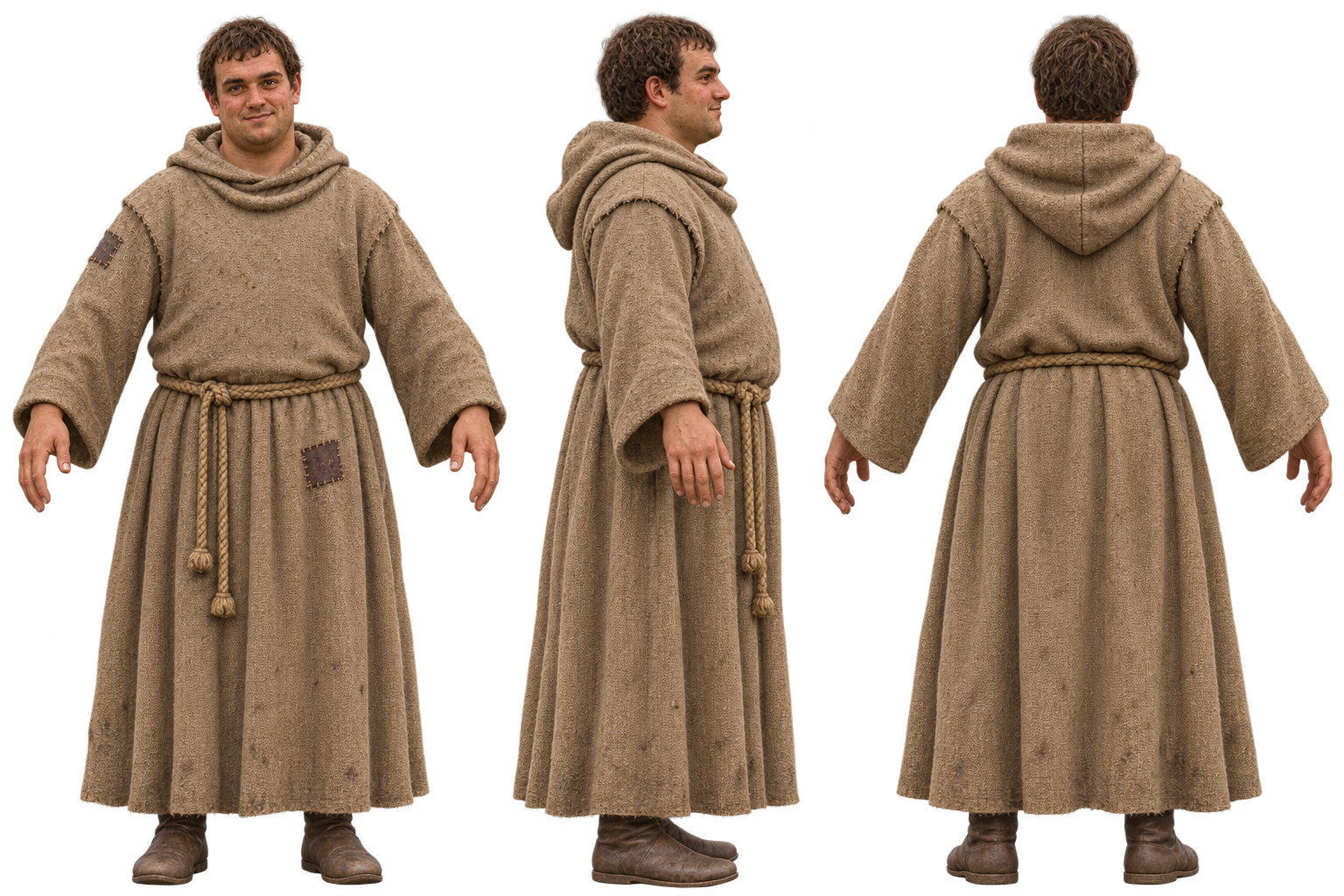
Full-body front, side and back references for making the game’s characters. The six friends’ name-to-face pairings are working assignments; the newer looks marked concept are ideas to explore.
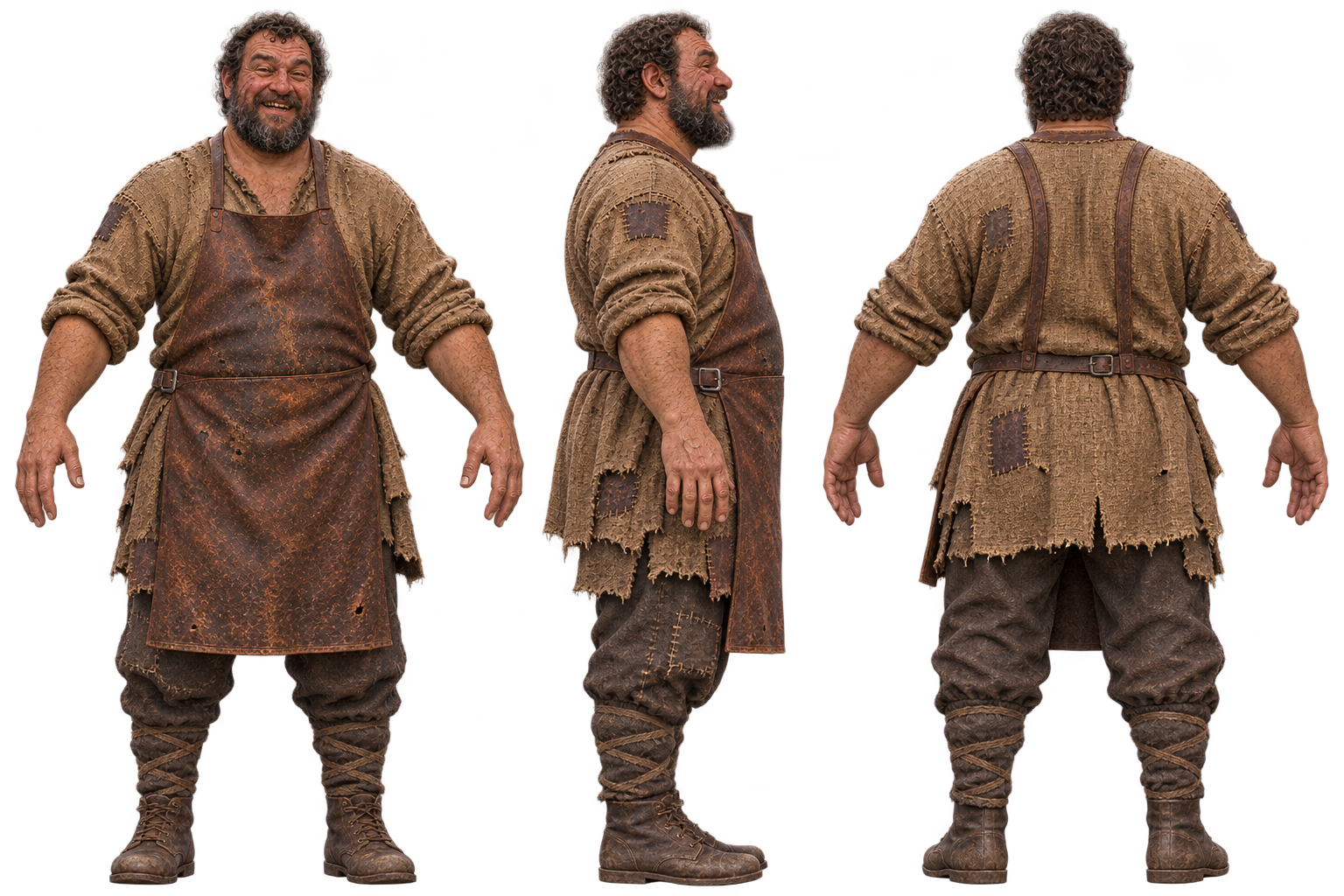
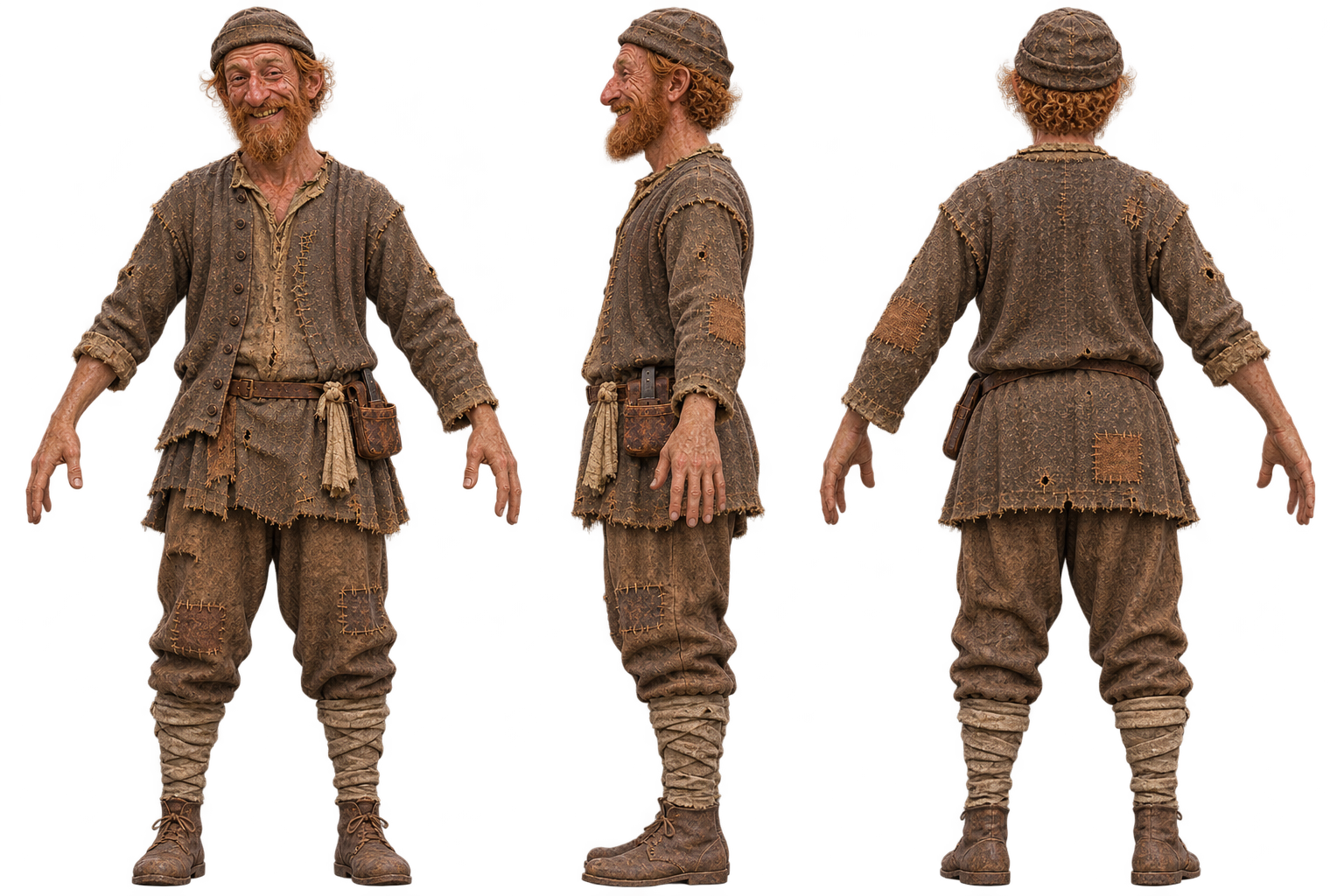
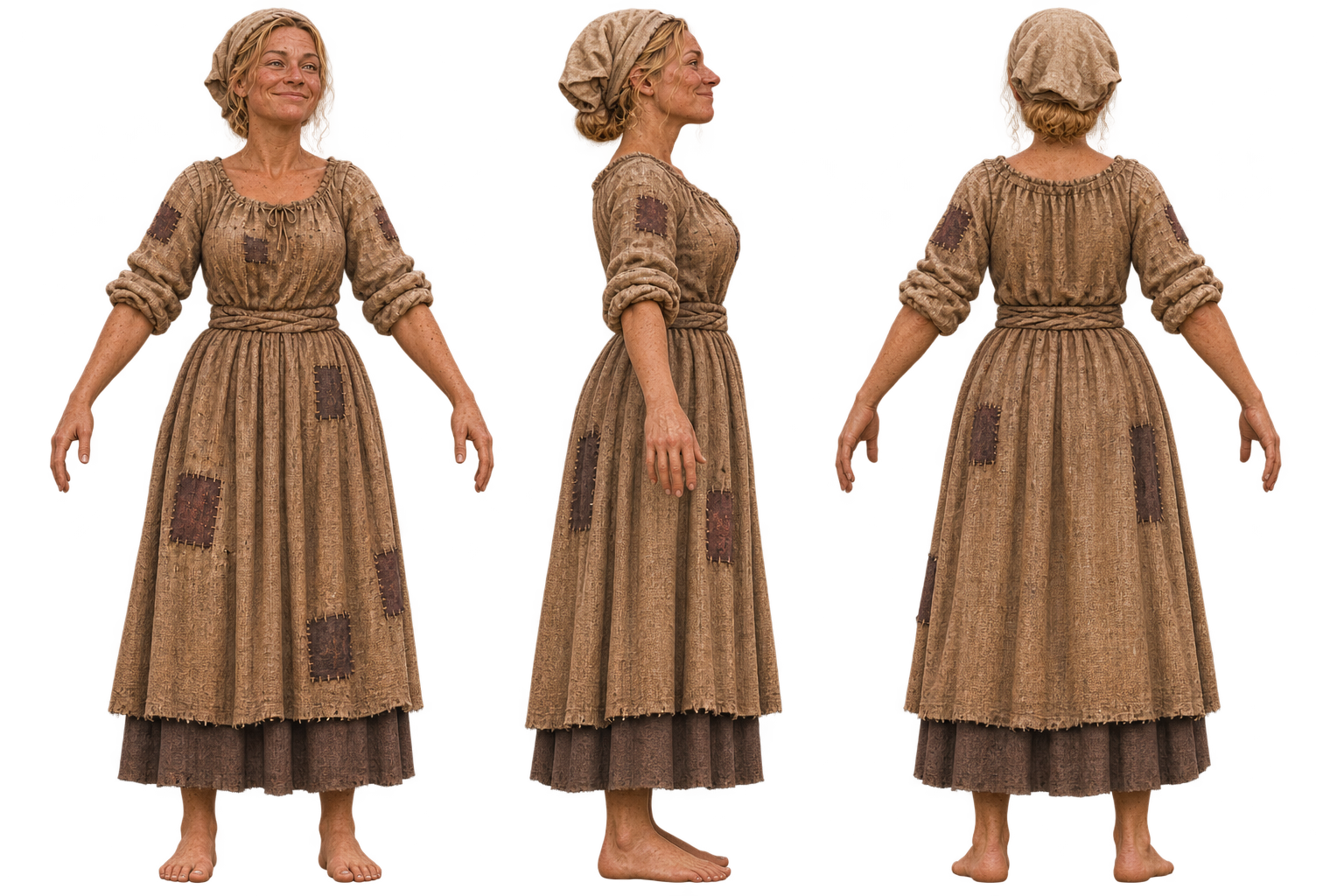
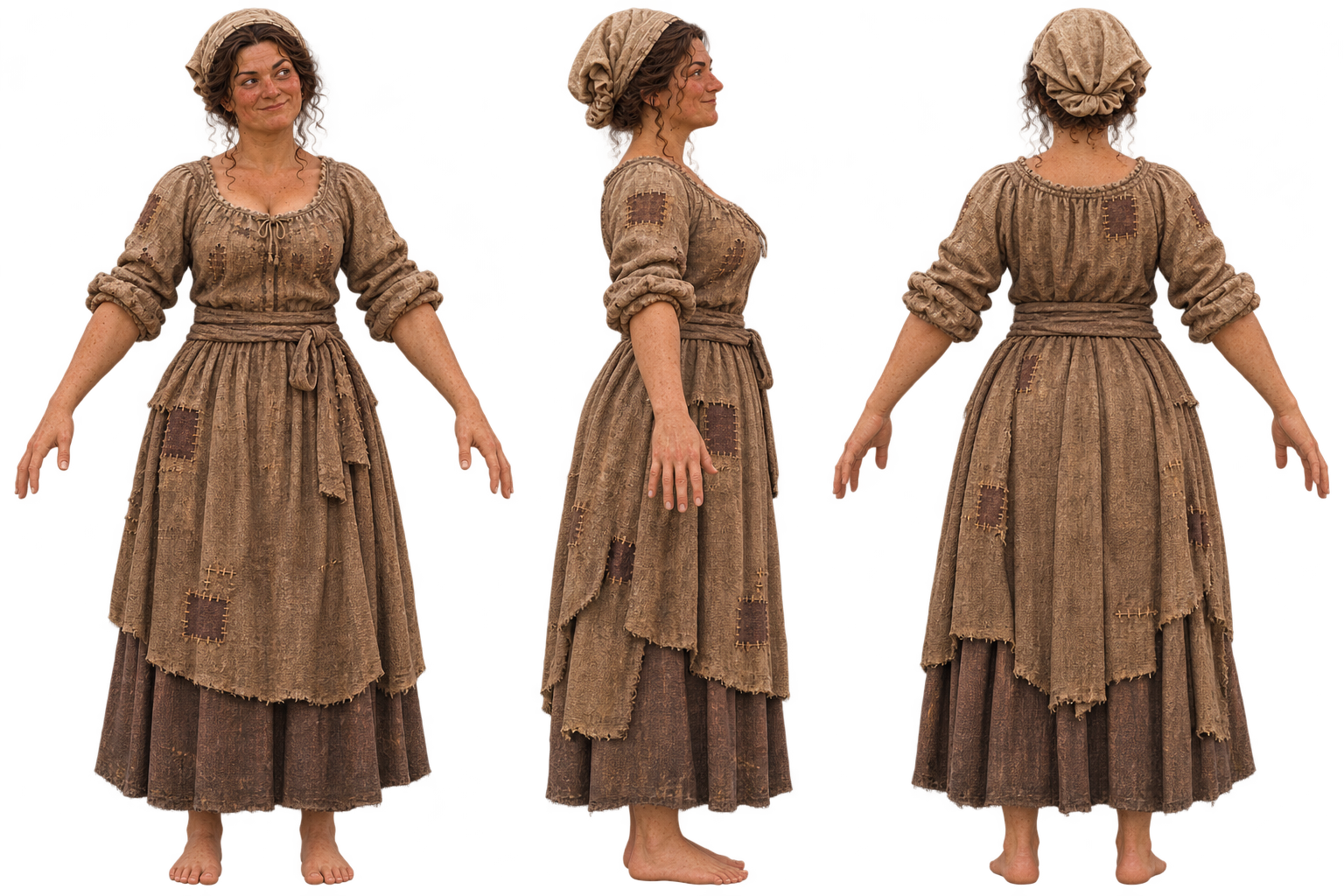
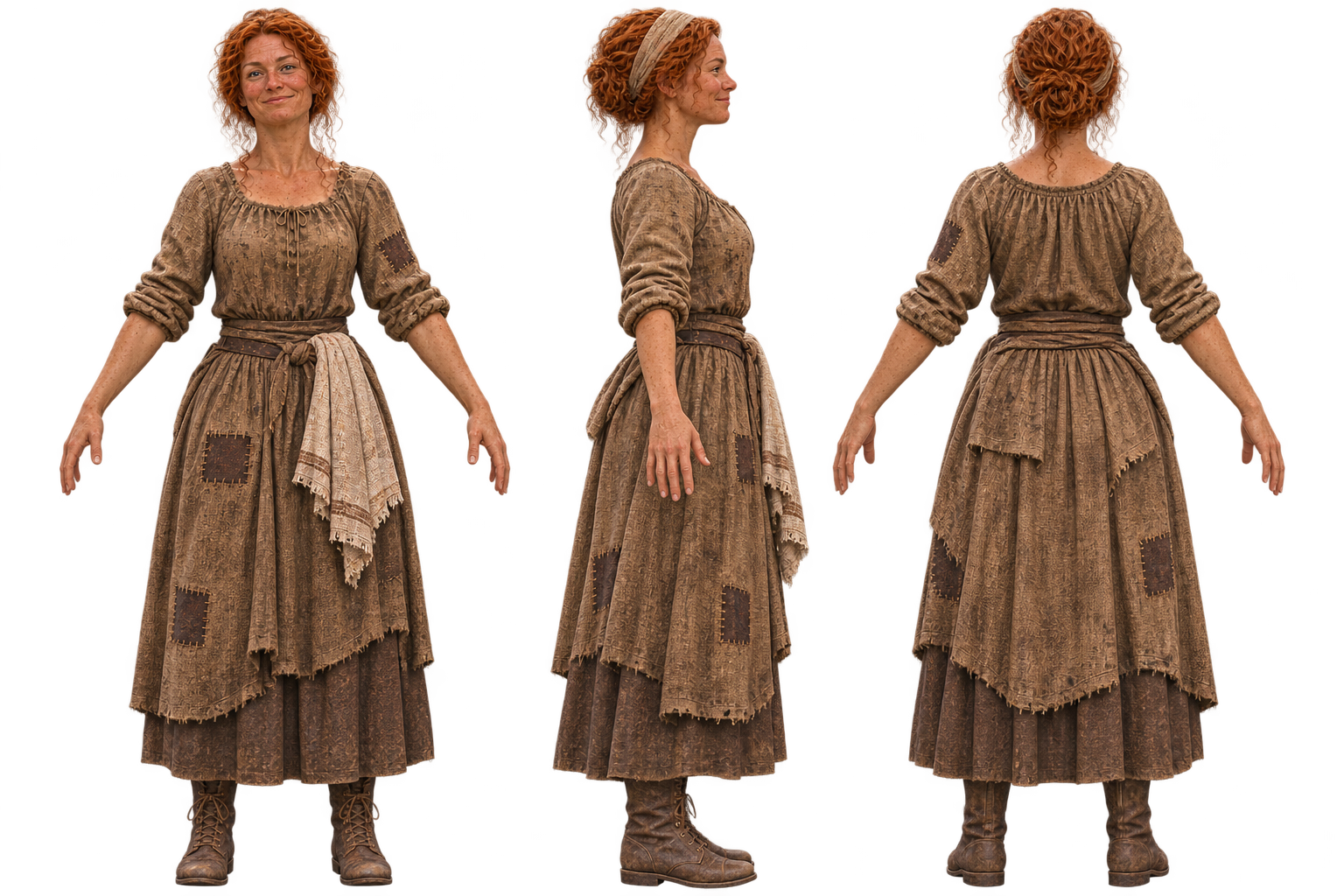
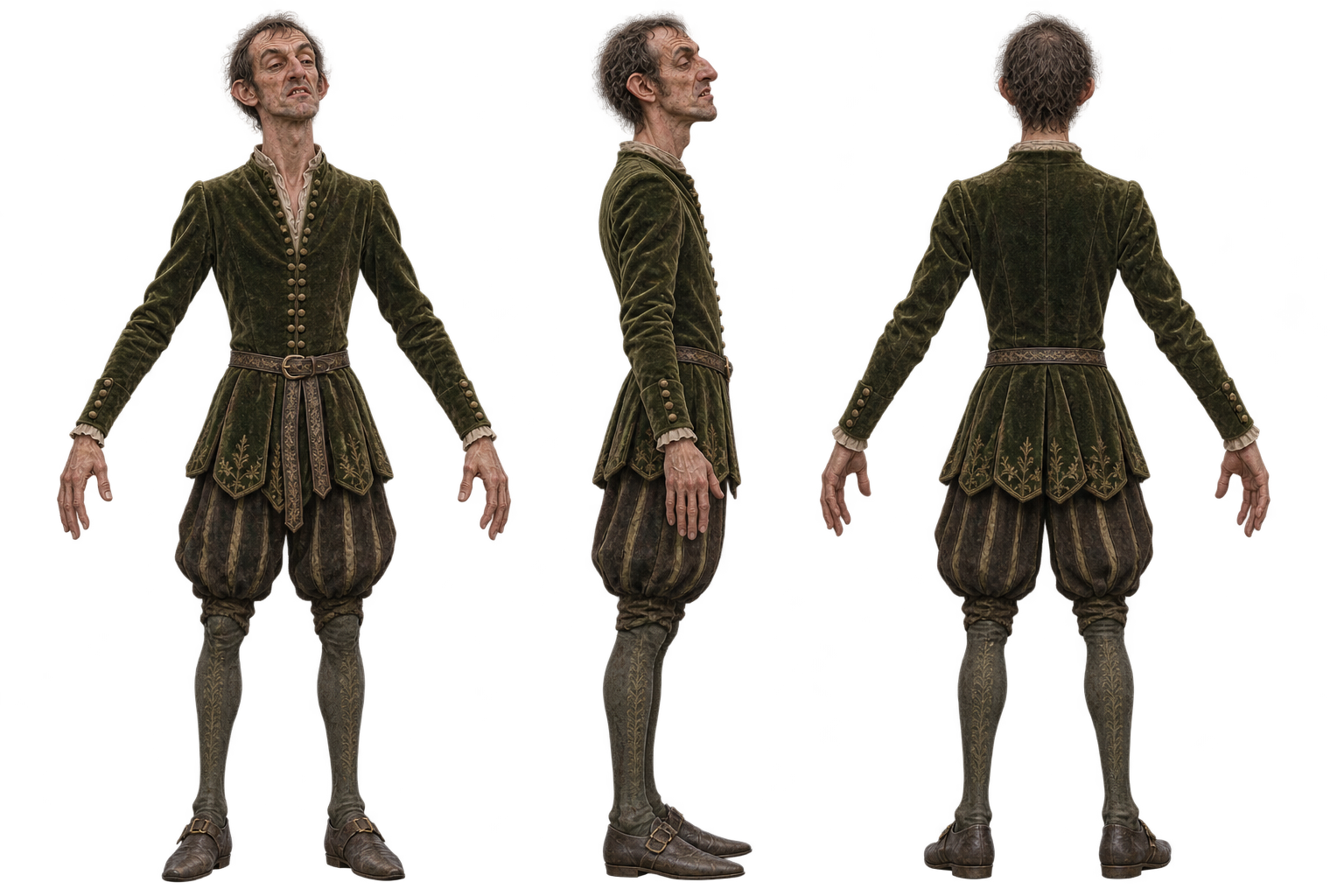
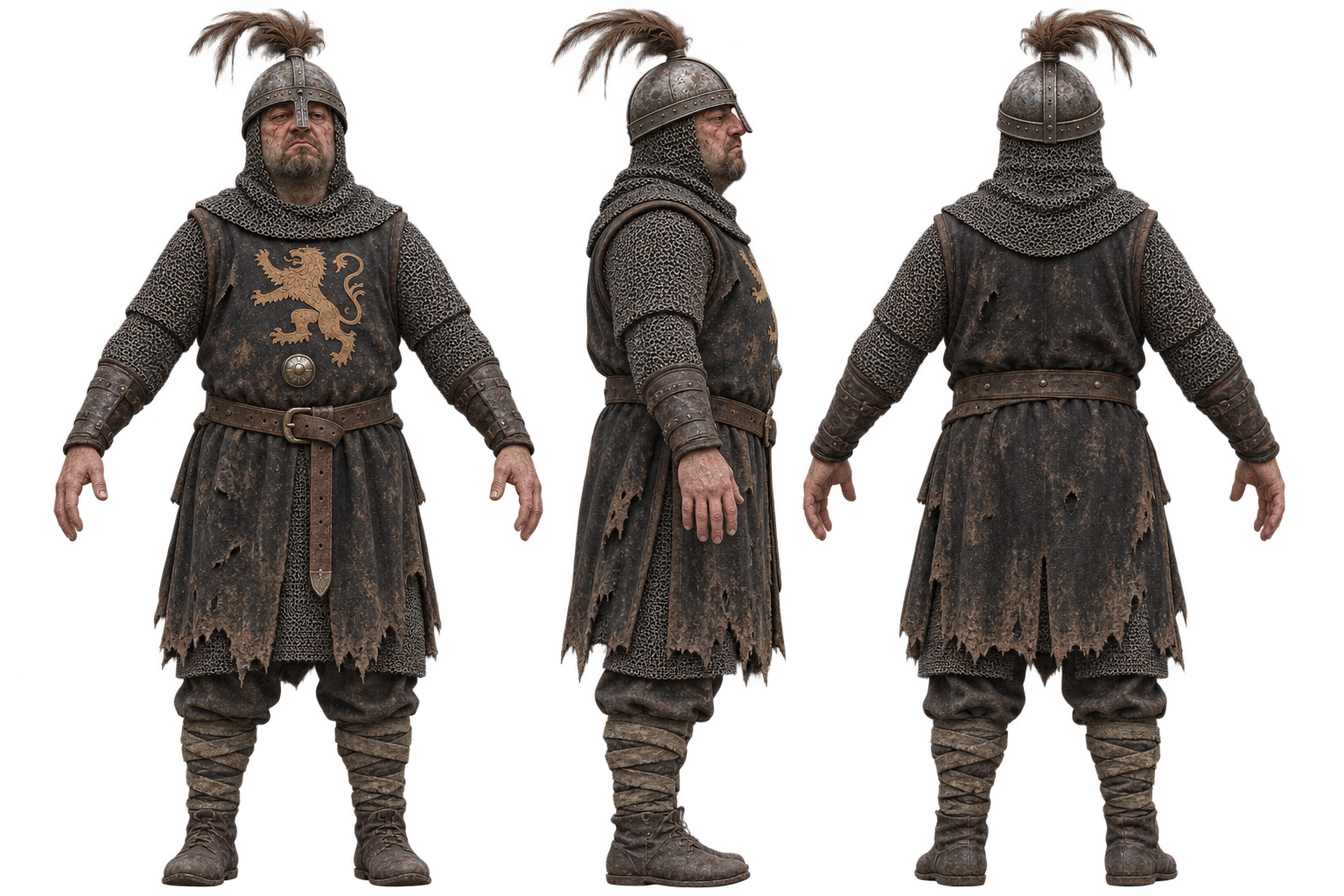
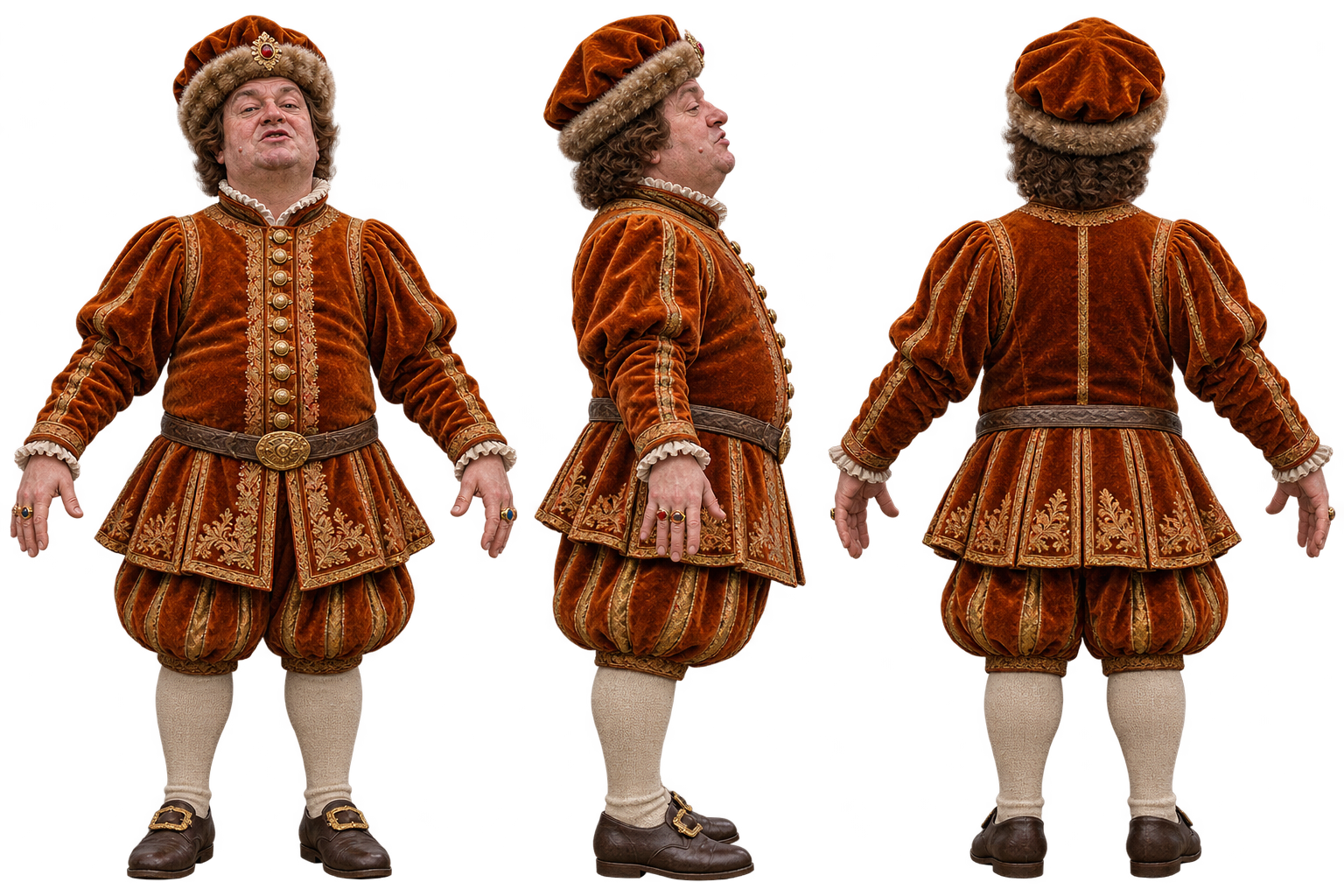
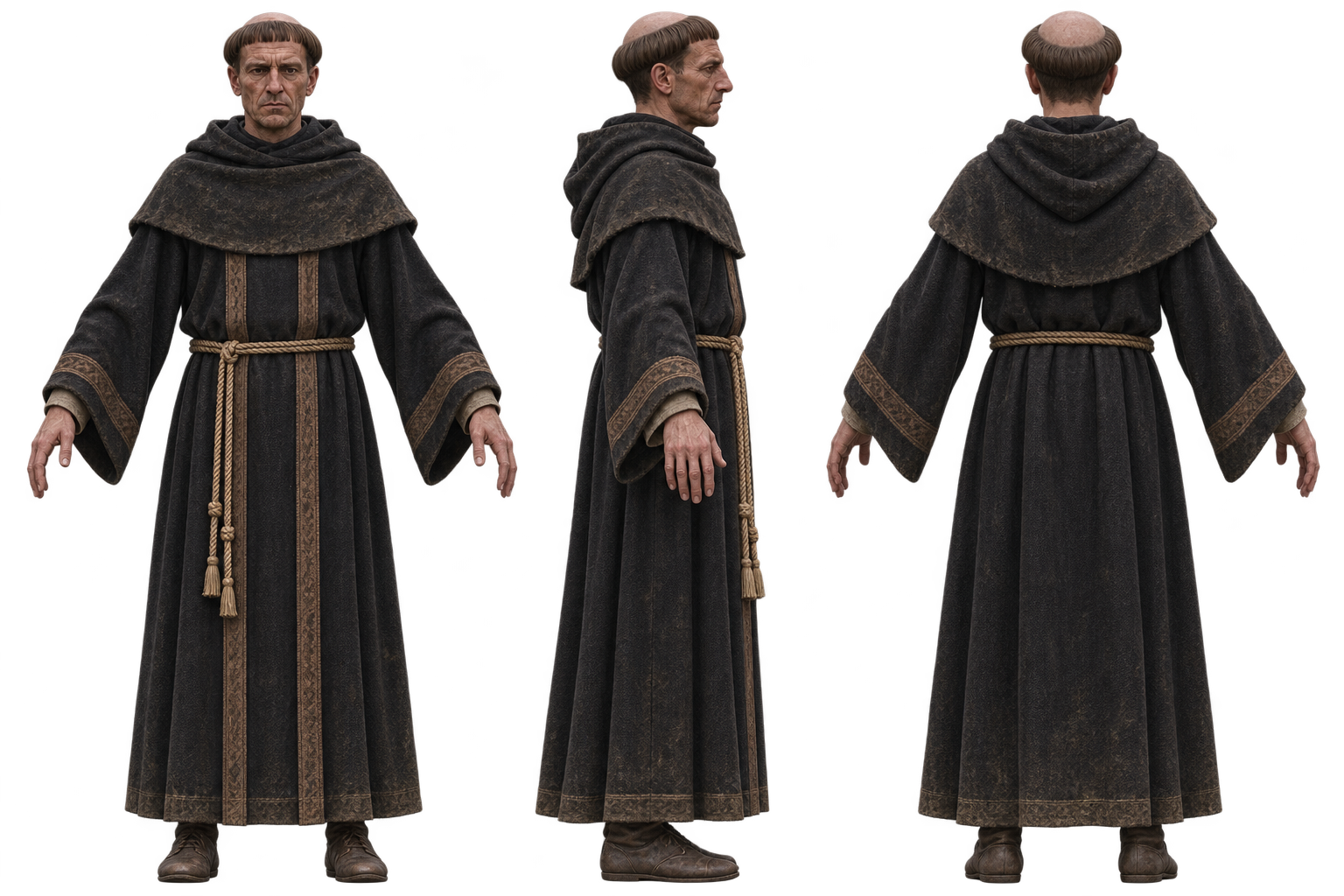
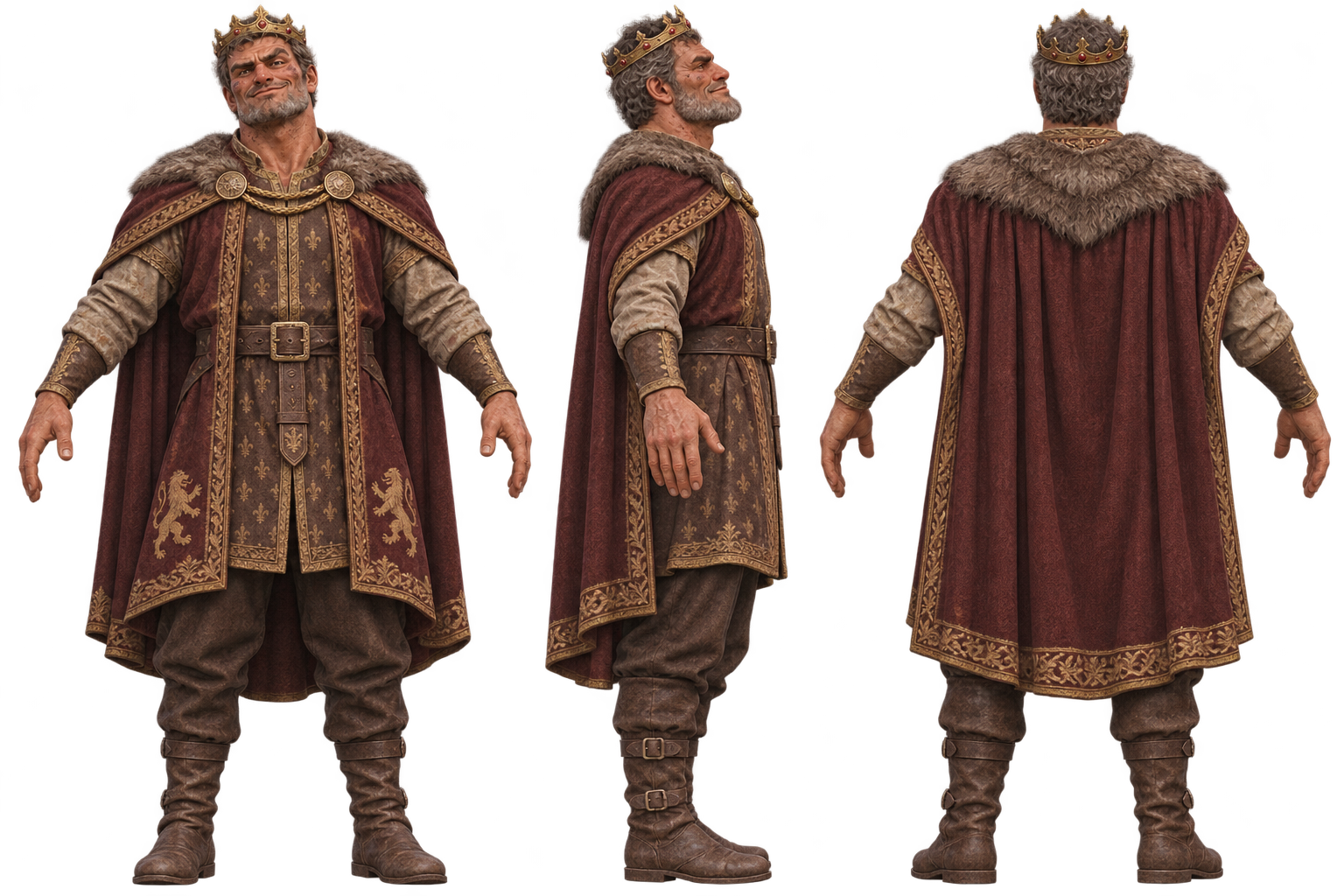
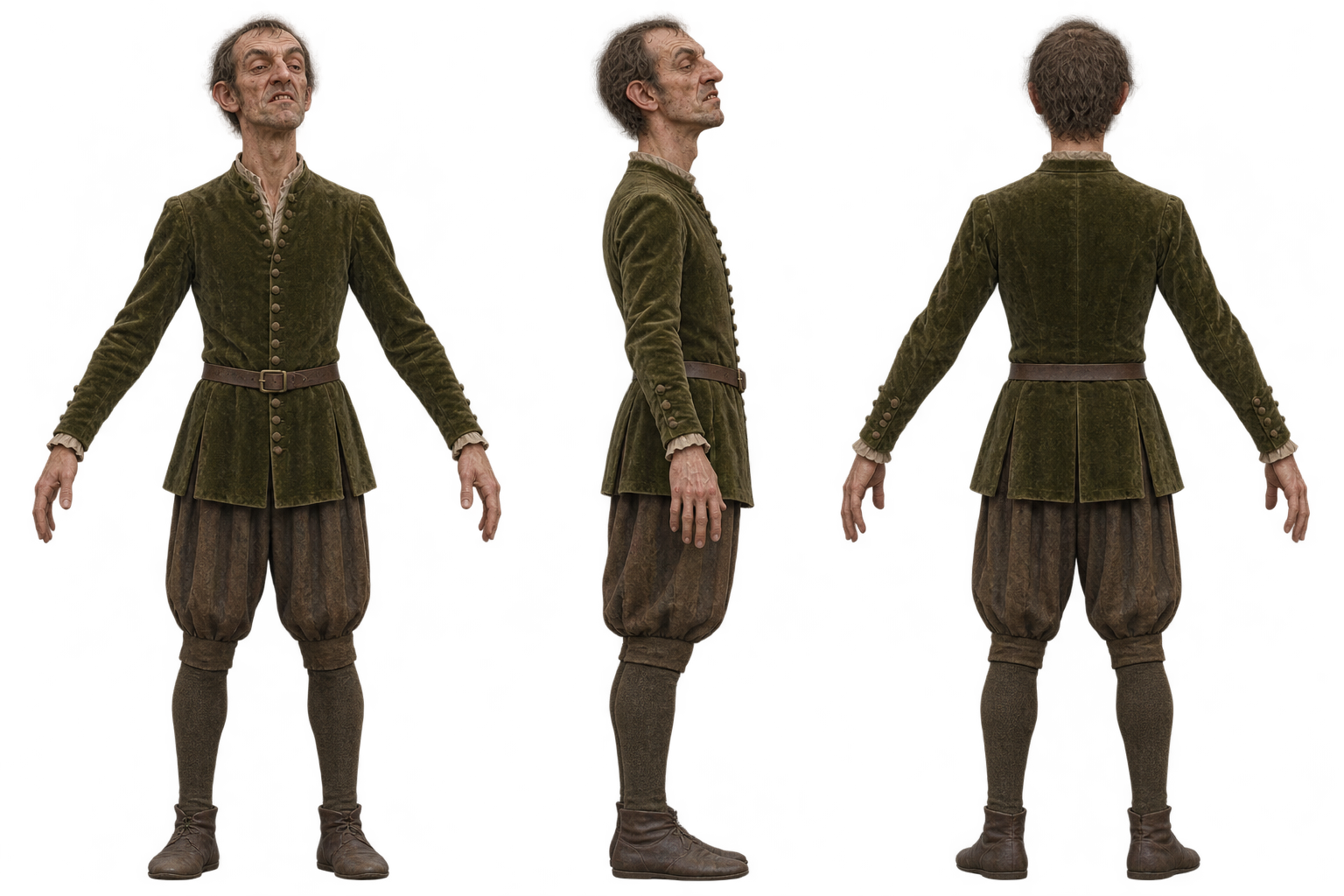
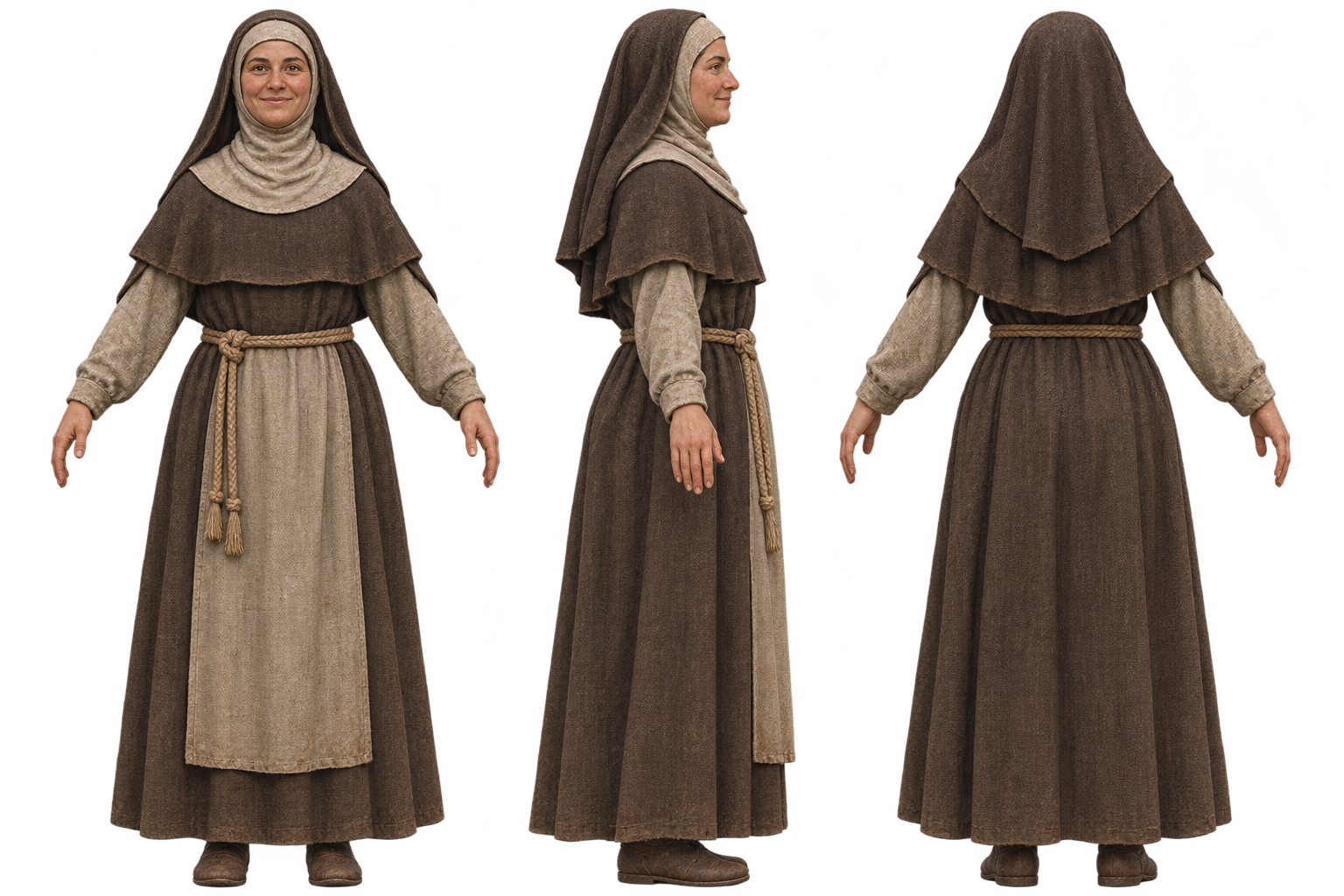
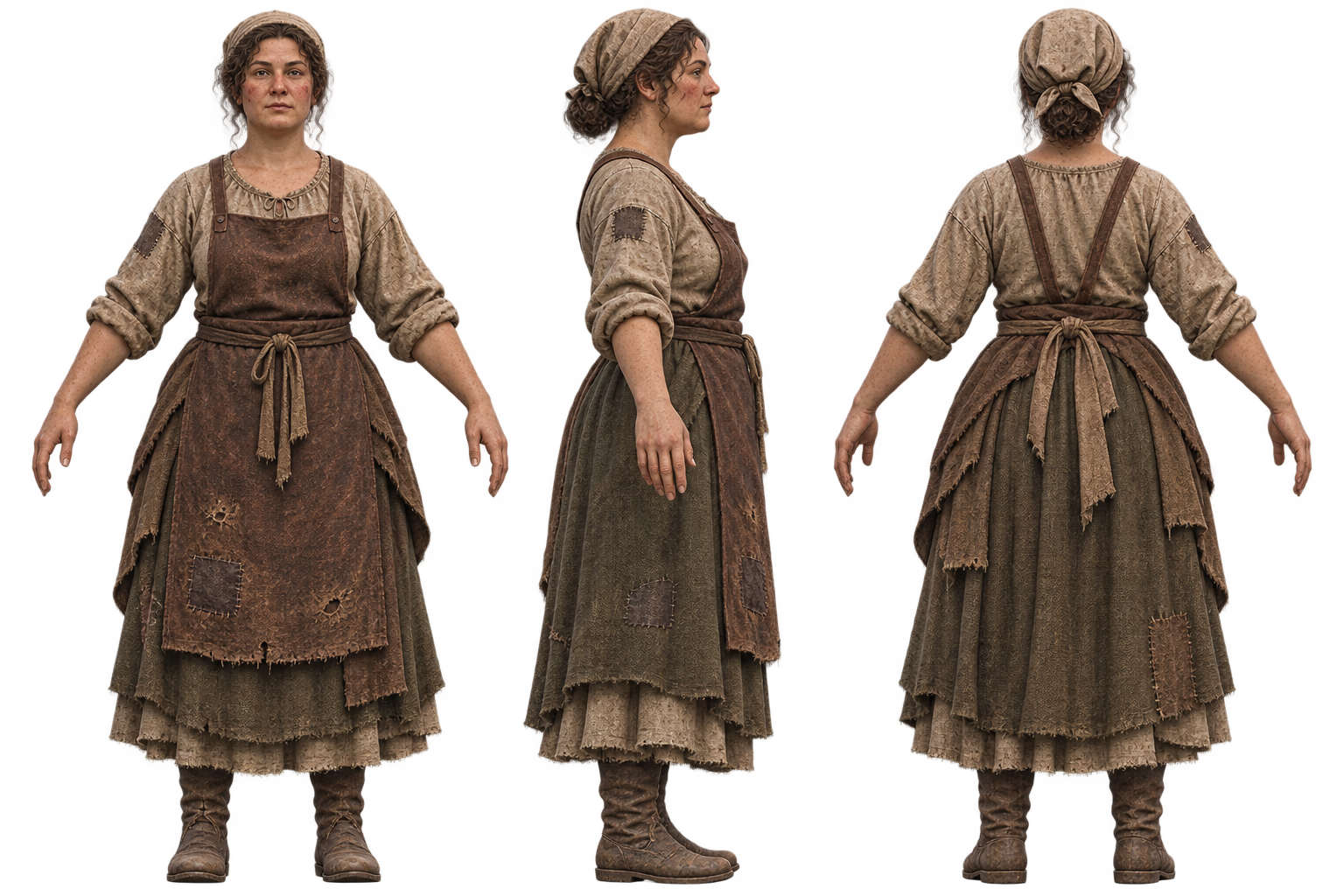
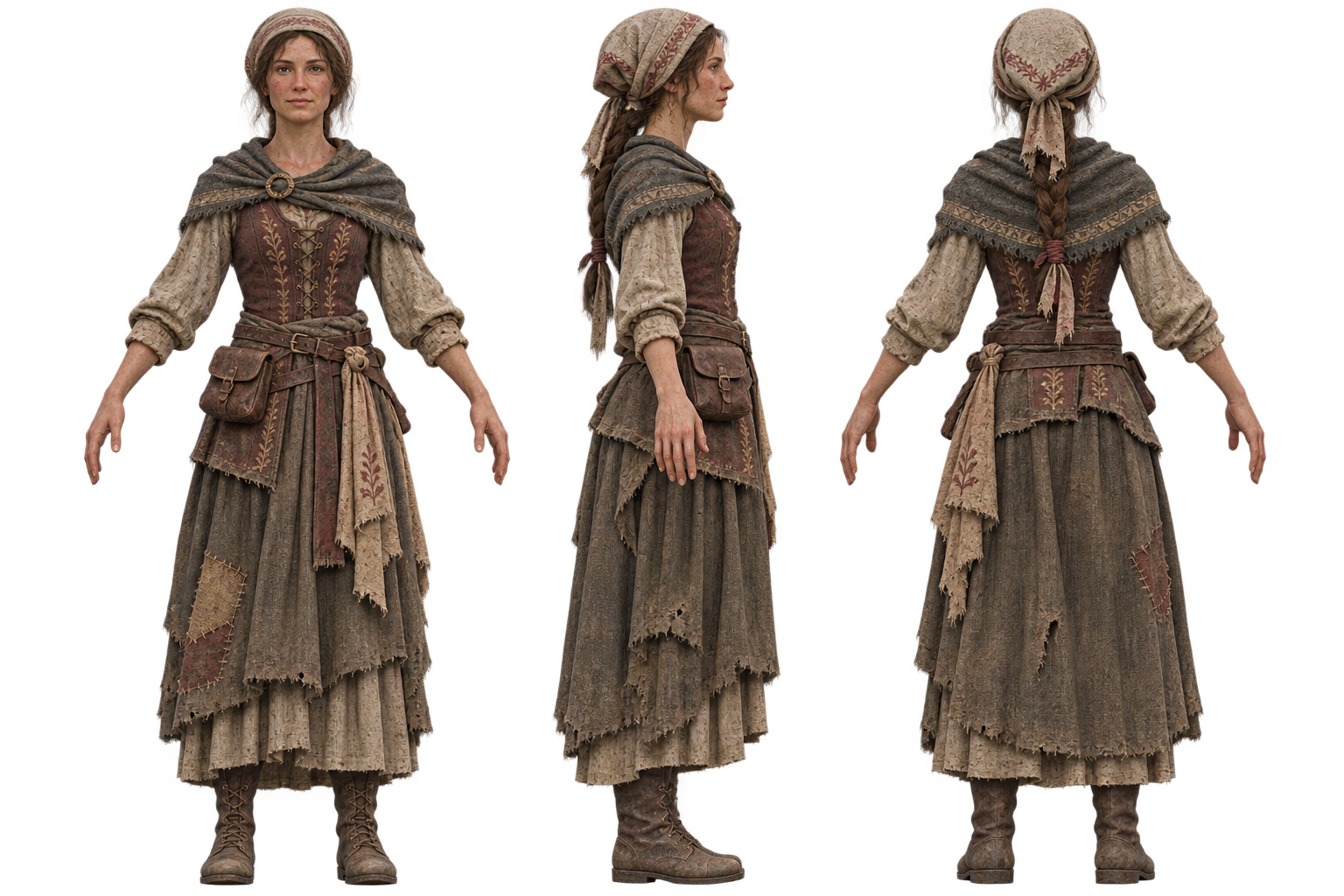
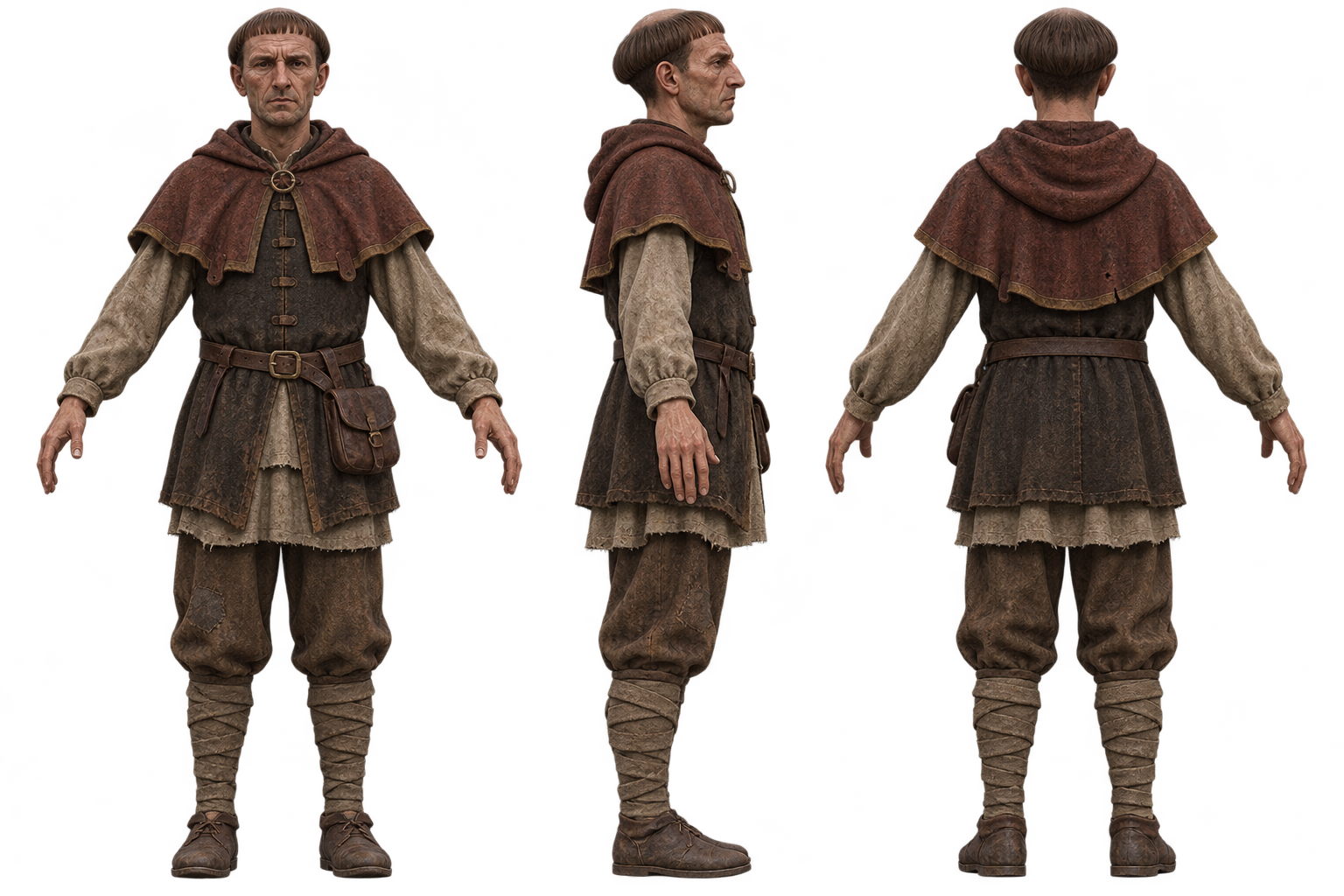
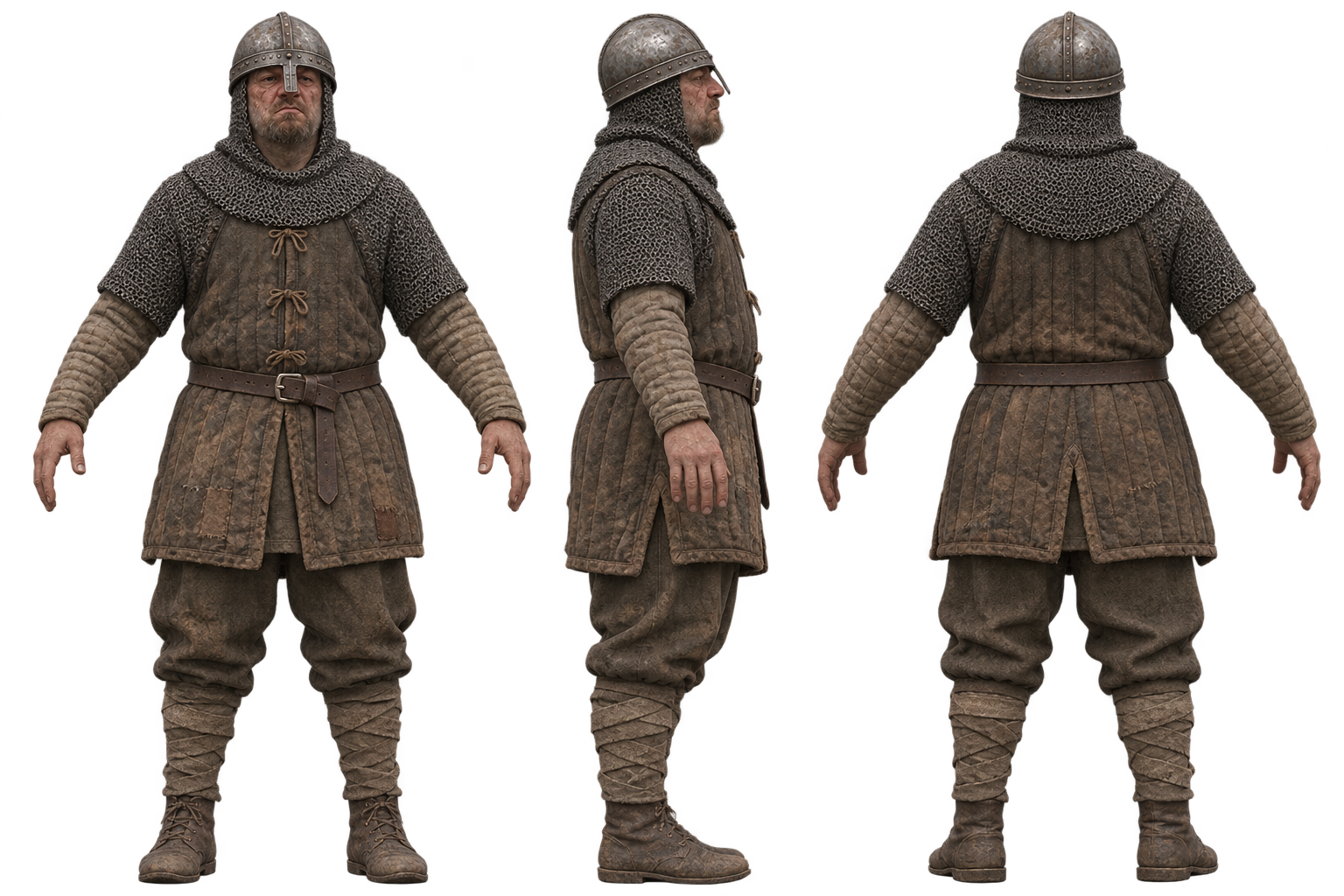
This is the build diary alongside the scene book: what was made, what was checked, and what still needs work. Code passing a test is not the same as a game feeling good to play.
Last updated . Times below are Eastern Standard Time (EST). This is a dated snapshot, not a live status feed.
The game repository began, with the story, the muster, the stronghold campaign and the first Unreal gameplay foundation taking shape. Early gameplay code was written before it had been compiled or run; those first records describe intent, not a verified playable game.
Successive integration passes brought the gameplay systems together, with compilation and automated checks recorded. A staged standalone Mac build was packaged. That established a build to inspect, not evidence of a complete, successful playthrough.
A UI pass replaced the debug lettering and restyled the menus, then opened the new packaged build. The title, pause and settings screens were inspected. The first moments of play revealed a camera stuck inside the hut roof and an unfinished-looking village. Those problems remained open in that report; most of the game still needed an on-screen playtest.
The sound system was connected, but its sounds and levels were generated placeholders. The UI pass reduced the master volume and disabled the placeholder music; nobody had verified the result by listening. The next sound-design task is to audition real assets, replace the placeholders and listen to the mix in the game.
Proposed direction: quiet countryside, wood and iron, leather and footsteps, sparse lute, flute or fiddle, occasional comic character reactions, and a recognizable persuasion cue. This is a proposal, not an approved soundtrack.
The director asked for the sound-design notes to be saved in the repository and this timeline to sit alongside the scene book. Future entries should record evidenced milestones and remaining problems, with listening, playtesting and approval kept separate from implementation.
A packaged Mac build went to the Epic AI MegaJam on itch.io before the deadline. After the deadline the game moved to Windows only: it is built, packaged and played there, and the Windows build has its own download page on this site. A build going out is not the same as a finished game.
Game wiki: characters, story, gameplay and the campaign map · This page is the short reading edition.